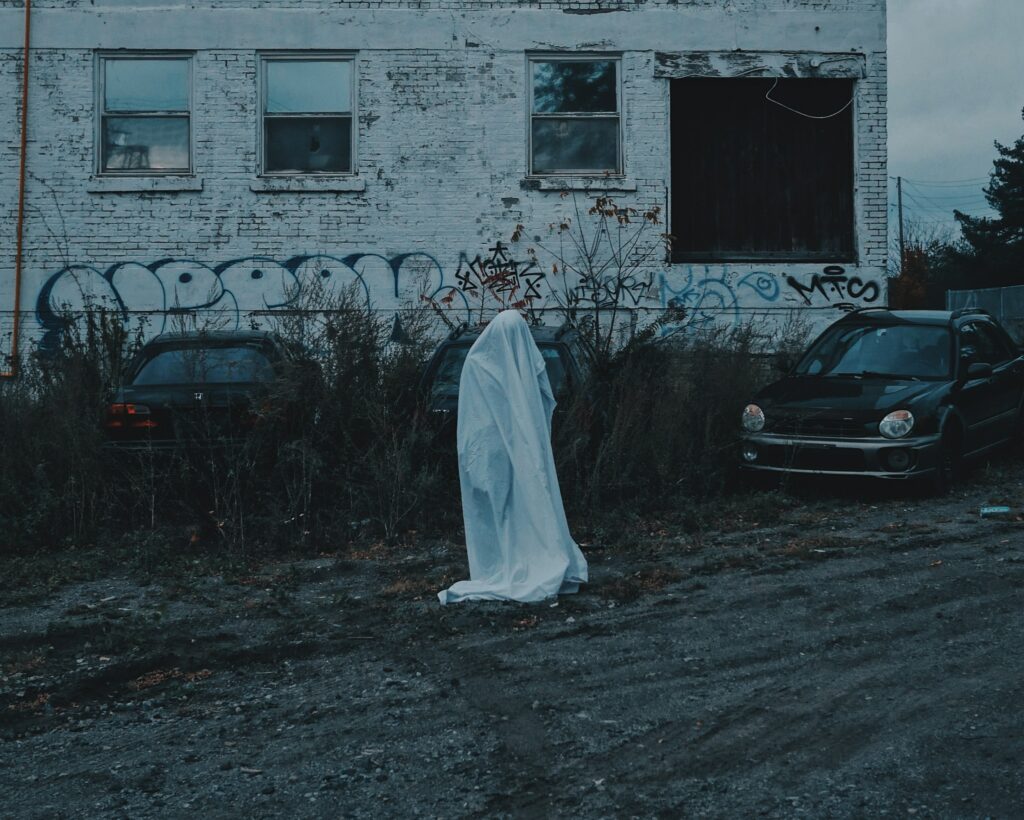
This inquiry project was an absolute blast for me. I am sure it helps that I am a horror fanatic. I have definitely learned from this experience, especially in terms of engaging in an inquiry.
I really enjoyed researching and learning about the different films. I learned a lot about film production, special effects, the actors’ experiences and random cool facts. I kept telling my partner these random bits of information I collected from this process. I really liked the different categories I used for rating. When watching the films, I was able to focus on the different categories and feel I gained more from the viewing. As well, I finally exposed myself to some of these older films. In particular, The Thing was a fantastic film that I had never seen before and I am really glad I was able to finally watch it. I am also proud of myself for surviving The Exorcist. The last time I tried to watch it was in grade 8 and I made it halfway. Thankfully, I do not need to watch it ever again.
I feel the biggest problem was that watching movies is so time-consuming, so when the semester really picked up for me, it added to my workload to also watch a movie. Though, I have to say it was fun to say, “I neeeed to do my homework… It’s watching a movie.” For a future inquiry, I will definitely think outside of the box and try something a little less time-consuming. Another negative aspect of this inquiry project is that it is not suitable for children even though this is an educational blog. I acknowledge this fact. My thought for the future is to put in a “continue reading” block so then people won’t initially see the post. Otherwise, I will make them all private.
In terms of helpful resources, I found Youtube reviews and analyses worked really well for this inquiry topic. I definitely used both Wikipedia and IMDb for plot summaries, actor information and any other miscellaneous information. I found that I used different sources, such as blogs, magazines, and news sources. It was interesting to discover all of these resources and look at all of the different opinions.
Finally, I feel it is important that I choose my favourite film. This is a difficult decision… The scariest and most disturbing film was The Exorcist. I truly could not get those scenes out of my head. In my opinion, the best film was Psycho. I hadn’t seen it in a while so I forgot just how amazing it is. Hitchock really was a master of his craft and Anthony Perkins was perfect for this role. A complicated answer, I understand, but that is how I see it.
Now then… There is a new Scream film out in theatres, so I must be off. 🙂
This post contains content not suitable for children. It contains discussion about violence, gore, and death. There are some incredibly graphic mentions of self-harm.
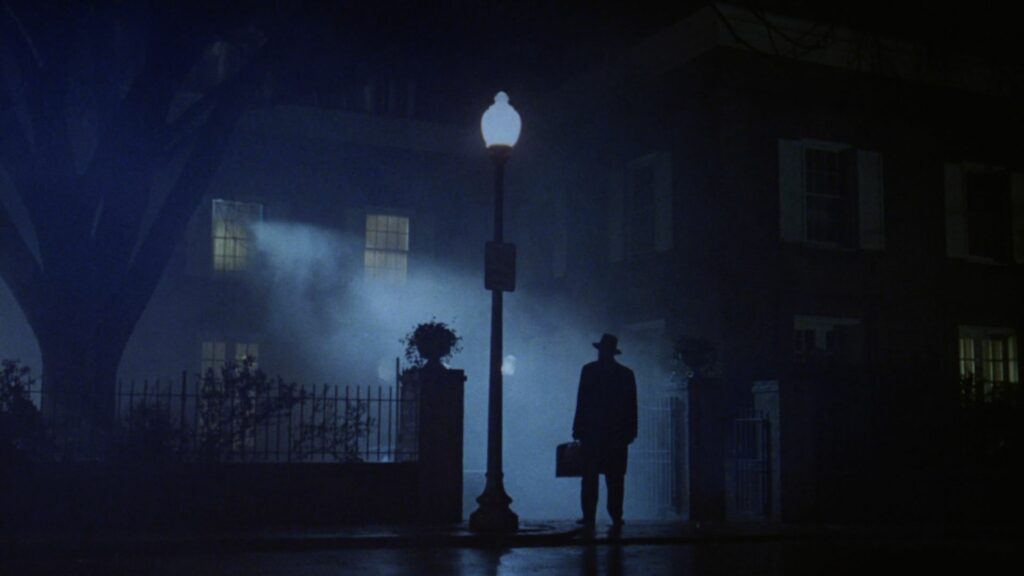
The Exorcist (1973), directed by William Friedkin and written by William Peter Blatty, follows a girl possessed by a demon, her mother trying desperately to help her and the priests that perform the exorcism. The film begins in northern Iraq with Catholic priest Lankester Merrin, played by Max von Sydow, working on archeological digs where he uncovers a Saint Joseph medallion and a small figurine representing Pazuzu, an ancient demon.
Meanwhile, in Georgetown, actress Chris MacNeil, played by Ellen Burstyn, works on a movie with her alcoholic director, Burke Dennings, played by Jack MacGowran, and lives in a temporary home with her daughter, Regan MacNeil, played by Linda Blair, and several servants, played by Kitty Winn, Rudolf Schündler, and Gina Petrushka. Chris notices a Catholic priest, Father Damien Karras, played by Jason Miller. He is going through a crisis in his faith and job as a psychiatrist and counsellor to fellow priests. He visits his mother, who dies immediately following. A statue of Mary is found desecrated in a church in Georgetown, foreshadowing the demon’s arrival and subsequent possession.
Life seems to be going well for Chris until Regan begins to act differently and erratically. Chris hears strange scratching sounds from the attic, but cannot find the source of the sound. As well, Regan finds an Ouija board and has conversations with an imaginary friend named “Captain Howdy”. During a big party, Regan comes downstairs and then urinates on the carpet in front of a group of party-goers. Regan becomes violent and exhibits abnormal strength Chris, an atheist, looks to the medical community for answers to her daughter’s issues. The doctors run a multitude of tests, but come up with no physiological cause for her illness. The doctors continue to invalidate Chris’ experiences and make diagnoses that are all discredited.
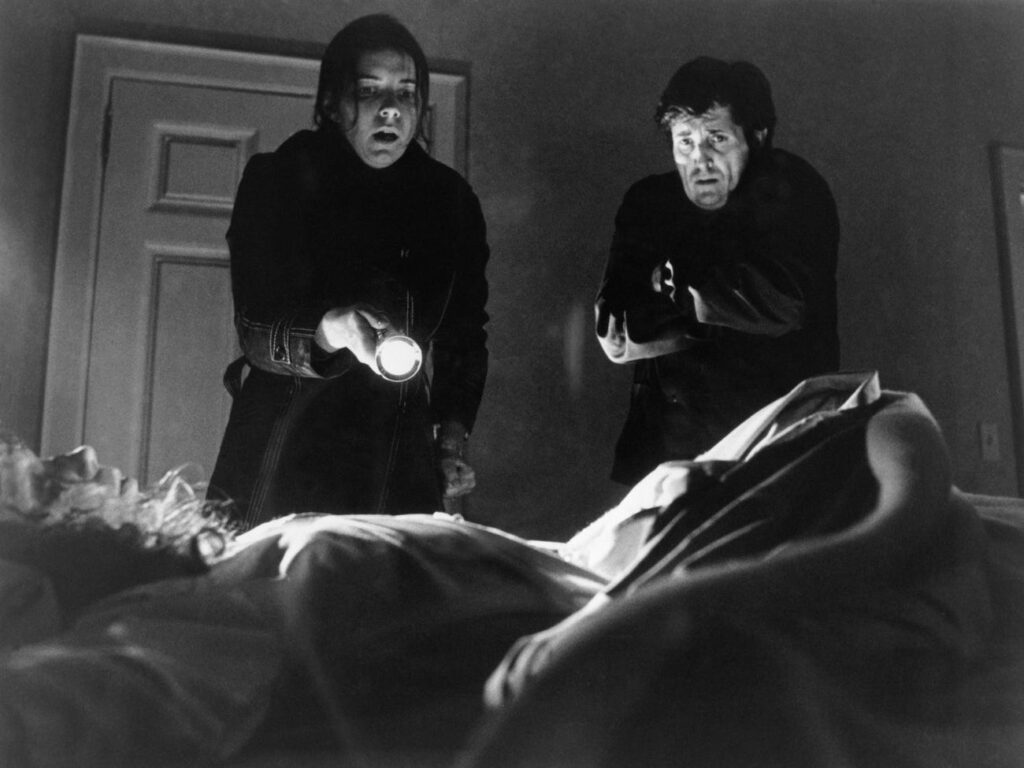
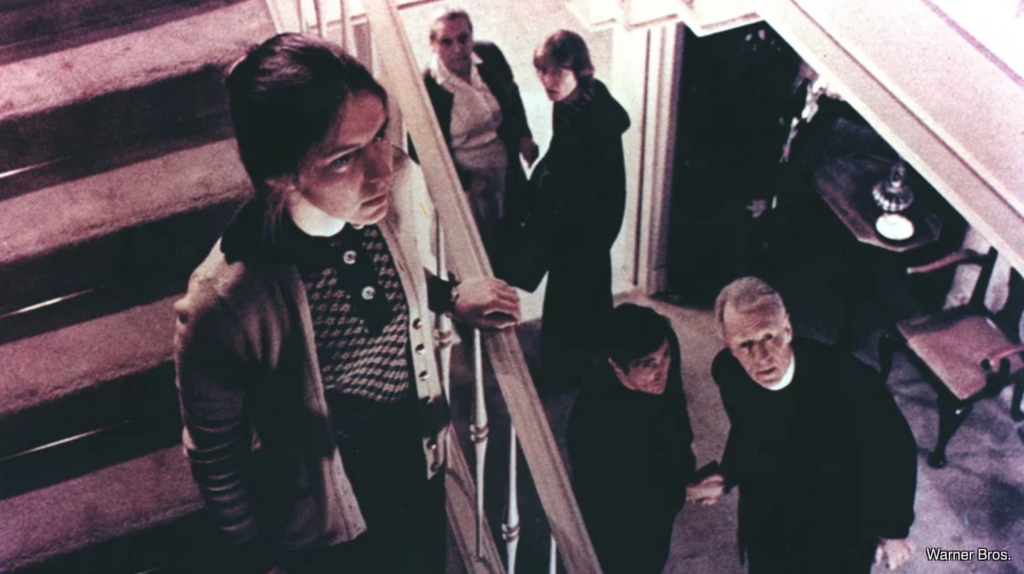
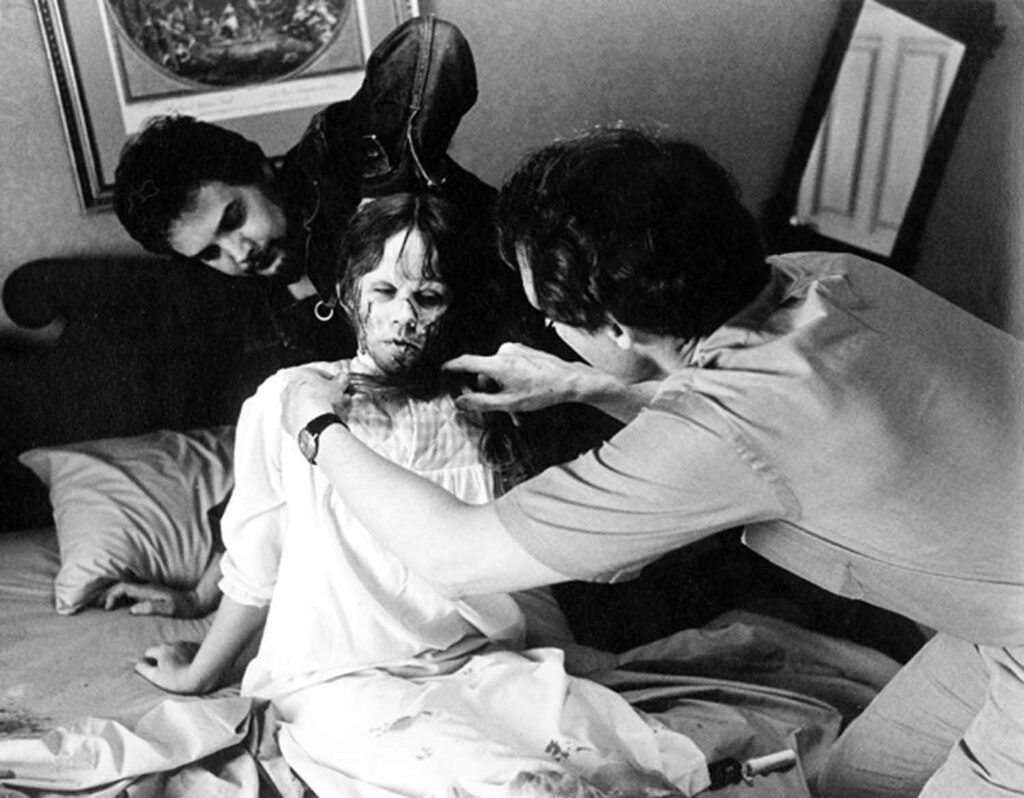
Kitty Winn, Jason Miller and Linda Blair in the Exorcist taken from The Insider
One night, Chris comes home to Regan sleeping alone in the house. It comes out that the director, Burke Dennings, had been called to babysit while the nanny had run an important errand. Dennings is found at the bottom of a large staircase outside MacNeil’s house with his head turned backwards. This introduces the homicide detective William Kinderman, played by Lee J. Cobb, instantly connects this highly suspicious and supernatural death to the church’s desecration. He questions Chris and Father Karras. The situation escalates when Chris finds Regan violently masturbating with a crucifix. The possessed Regan then turns her head backwards and speaks in Denning’s voice, while moving objects mentally. This sends Chris into a full mental breakdown and causes the household to confine Regan to her bedroom.
As the demon continues its possession, Regan’s health begins to deteriorate. Chris meets Father Karras and requests an exorcism for her daughter. At first, he is skeptical, but after multiple visits to the house, he begins to believe. During his visits, the possessed Regan speaks in tongues, claims to be the Devil, projectile vomits into Karras’ face, and reacts to tap water that Karras claimed was holy water. Chris confides that she believes Regan pushed Dennings out of the window and one night, Karras sees the words, “Help me”, appear on her stomach.
Ultimately, he makes the request for an exorcism and finds out it will only happen with an experienced priest. Thus, enters Father Merrin, who has performed exorcisms before and has been battling with Pazuzu. Both priests arrive at the residence and prepare for the exorcism ritual. Merrin warns Karras that the demon will speak lies and perform a psychological attack. Sensing his weakness, the demon focuses on Karras, specifically targetting his dead mother. The demon screams vile and horrific things during the entire exorcism.
At a point, the priests take a rest and Merrin takes heart medicine. Karras enters the bedroom early and is taken aback when he hears his dead mother’s voice from Regan. Merrin dismisses him, citing weakness, and continues the exorcism. Karras speaks with Chris, giving him a feeling of courage and determination. He finds Merrin dead and begins to punch possessed Regan. He begins to scream for the demon to take him instead. The possessed Regan tears off his Saint Joseph medallion and then the demon enters Karras’ body, leaving Regan free. Karras then jumps out of the window, dying in the exact same spot as Dennings. His friend, Father Dyer, performs his last rites as he dies. In the final scene, the MacNeil family packs up and leaves this Georgetown home. Regan looks healthy and is thankful to Father Dyer. As they leave, Chris returns Karras’ Saint Joseph medallion to Father Dyer.
Horror Film Rating System
Category
Rating (/10)
Performance
10
Special Effects
8
Violence
9
Score/Foley
7
Scare Factor
10
Performance
The performances in this movie are remarkable and committed. Ellen Burstyn was nominated for Best Actress for both the Academy Awards and Golden Globe Awards. Linda Blair won the Best Supporting Actress Golden Globe Award and was nominated for Best Supporting Actress for the Academy Awards. The breakdown of a mother whose daughter is unwell and violent was captured perfectly by Burstyn. As one of the main characters, she holds a good portion of this movie on her shoulders.
Linda Blair was 14 years old when she starred in the Exorcist and gave a prolific performance. Both Blair and Burstyn participated in a good portion of the practical and special effects, leading to multiple back injuries. In one scene, Burstyn landed on her coccyx, screaming in pain. That sound was used in this film and honestly makes me queasy to think about. (I have a minor coccyx injury so I relate!) The more gruesome scenes used a stunt double for Blair and voice actress Mercedes McCambridge performed the possessed Regan dialogue.
Jason Miller’s performance as Father Karras was also very well done. His stoney expressions and reactions to Regan’s demon are compelling, enhancing the events of the movie. Part of the realism of this film was attained through the direction of Friedkin who utilized harsh tactics. He slapped one actor in the face before a scene. During the scene where Regan vomits in Karras’ face, the actor was told that the vomit would hit his chest, so the reaction in that scene is genuine.
Special Effects
Released in 1973, this film was prolific in its contribution to the horror genre. To create the special effects, they utilized mechanical effects, life-sized puppets, editing tricks, lighting and other techniques. The makeup was done by William A. Farley and the special effects were done by Marcel Vercoutere. For the physical stunts, the actors and their stunt doubles were put in harnesses and their wires were yanked around to create the effect of the actor flying around the room or in Linda Blair’s case being pulled back and forth on the bed.
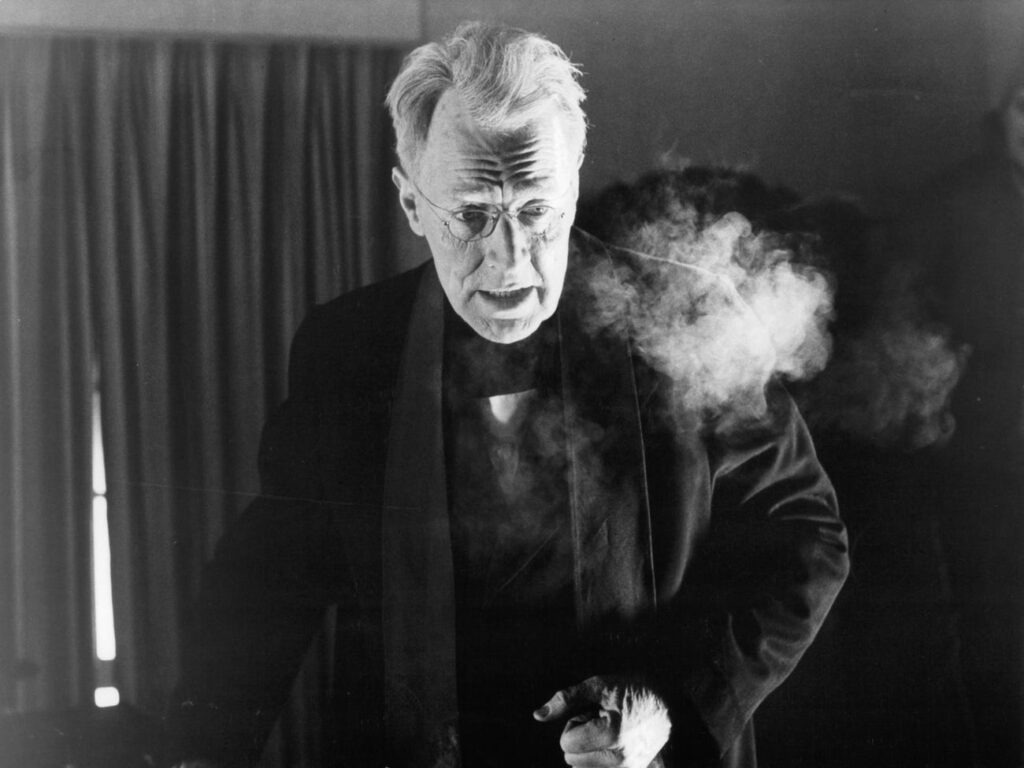
Another technique they used was to make a replica of Regan’s bedroom and place it in a refrigerator that went 20 degrees below zero, so as to show the actors’ breath in the room during the exorcism sequence. This was a bold move that lead to certain difficulties. In particular, they were only able to shoot five scenes a day and it meant lighting had to be perfected. One final special effect was the pea soup vomit that Regan projectile vomits repeatedly. This led to the actress being unable to eat pea soup for the rest of her life. The special effects are fantastic and scary, leading to this film becoming the model for future exorcism movies and one of the best horror films of all time.
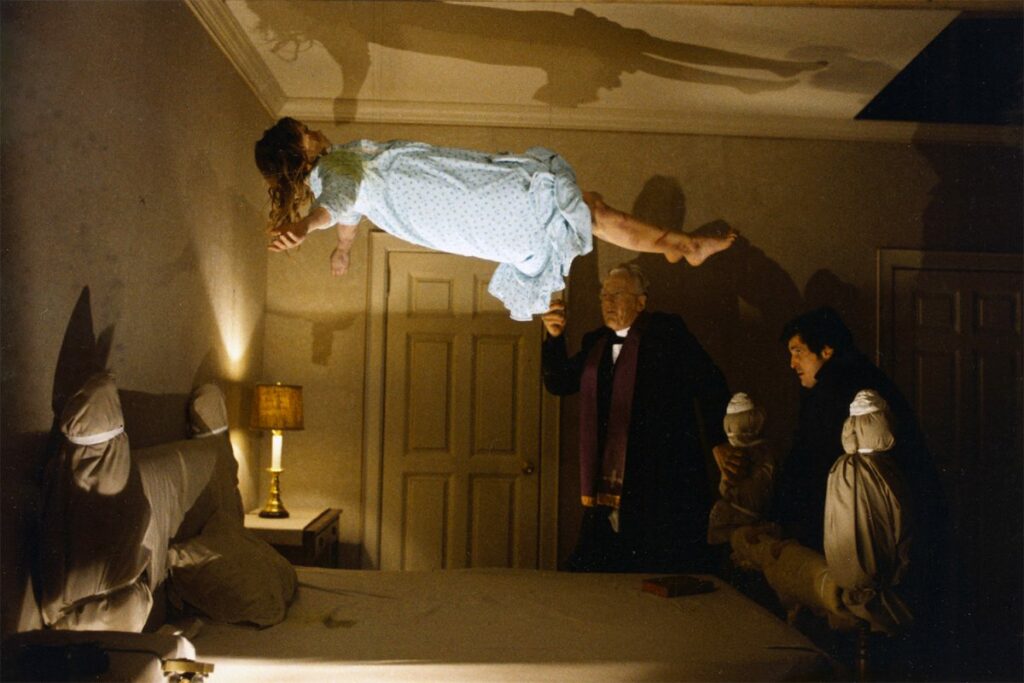
Notice Max von Sydow’s breath in this shot from The Insider
The Exorcist was fraught with behind-the-scenes drama that led to the idea that the movie was cursed.
Violence
This movie goes through moments of violence which are then followed by moments of distance and character and plot building. For the time, this violence in this film was shocking and novel, leading to people running out of the theatre, vomiting, or fainting.
One scene struck me as incredibly violent and disturbing. I am going to go into a bit of detail about this part. This is a trigger warning. Please skip to the next paragraph. This scene involves Regan violently stabbing her genitals with a crucifix. After watching, I keep having this scene flash in my mind. It is so violent and horrifying and presents itself as sexualized self-harm. I completely understand the reactions of audiences when it was first released as nothing like it had really been seen before in American cinema. This scene is deeply affecting and leads to an enormous sense of fear and repulsion.
Another scene that deeply affected audiences at the time was the realistic cerebral angiography, which involved a needle being injected into Regan’s neck and blood shooting out. It was definitely difficult to watch and I had to look away. It really was just a medical scene which nowadays is much less scary since we have shows like Grey’s Anatomy to desensitize us. I can understand why it caused such a reaction in the theatres at the time.
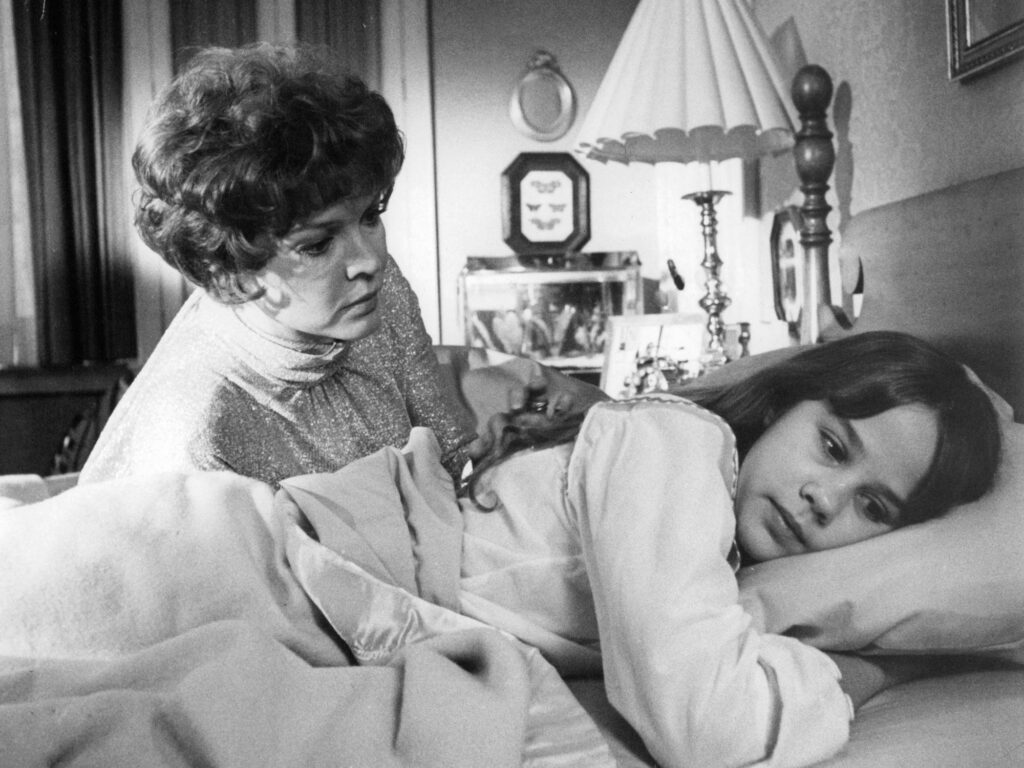
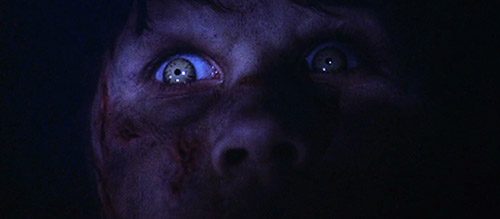
Linda Blair in the Exorcist, Image taken from The Insider
I would argue though most of the serious violence was left out as both Burke Dennings and Father Merrin died off-screen. In more modern horror movies, there would be a graphic death scene. It adds certain power to Karras’ death, which was similar to Dennings, but shown in a POV style and then the final shot from above of his body with people surrounding it. The exorcism sequence involves some violence, but I would argue most of the violence the demon inflicts is psychological through vile expletives. Overall, this film contains very graphic scenes of violence and gore, but it uses it purposefully and infrequently, creating a bigger effect on the audience.
Score/Foley
Firstly, the theme song is frankly iconic and incredible. It does sound like other horror themes, but it came much before. It is spooky and slightly disturbing but in a good way! The foley in this film is quite well done as we hear a lot of strange and gross sounds coming from the demon frequently. As well, the sounds are quite sharp and lead to the contrast between quiet moments and the serious action of the film. I cannot help but compare films within the horror genre. This film utilizes quiet scores and then loud violin screeches. In modern horror films, there is a constant onslaught of sound that is deafening at points. Sound is a very effective medium to create fear in an audience, but it must not be overused. The Exorcist’s use of sound is effective and brilliant, leading to Robert Knudson and Chris Newman winning an Academy Award for Best Sound.
I am officially a believer. Most of the lists of best horror movies had the Exorcist in the number one slot. I was skeptical and maybe a little scared. For a film released in 1973, it is absolutely terrifying. The pacing of the film is slow, but it lends itself to the added distance and isolation experienced by Chris, Regan, and Karras. This film was prolific in its creation of the exorcism genre. A big part of this is the battle between good and evil, God and the Devil. As well, the idea that an innocent child could be possessed right in her own home. It leaves viewers feeling unsafe and always at risk. A demon could possess us at any moment and make us do and say horrible things. There is a lot of graphic imagery, such as the flashes of the demon, Pazuzu, which occur throughout the film. As well, the masturbating scene is deeply affecting and terrifying. The entire exorcism sequence has the audience on the edge of their seats, maybe with their hands in front of their eyes. It is a battle with a supernatural force that has great power. Will the demon really be defeated? Ultimately, it ends happily with Regan free, Karras having found his faith, and Chris and her family moving away. However, audiences are left thinking: Is it really over? Can the Devil or a demon be defeated through death?
An incredible video essay on the Exorcist
This film will never be forgotten as it truly changed the consciousness of society and the horror genre. It is genuinely disturbing and scary. I believe for horror fans it is a must-watch.
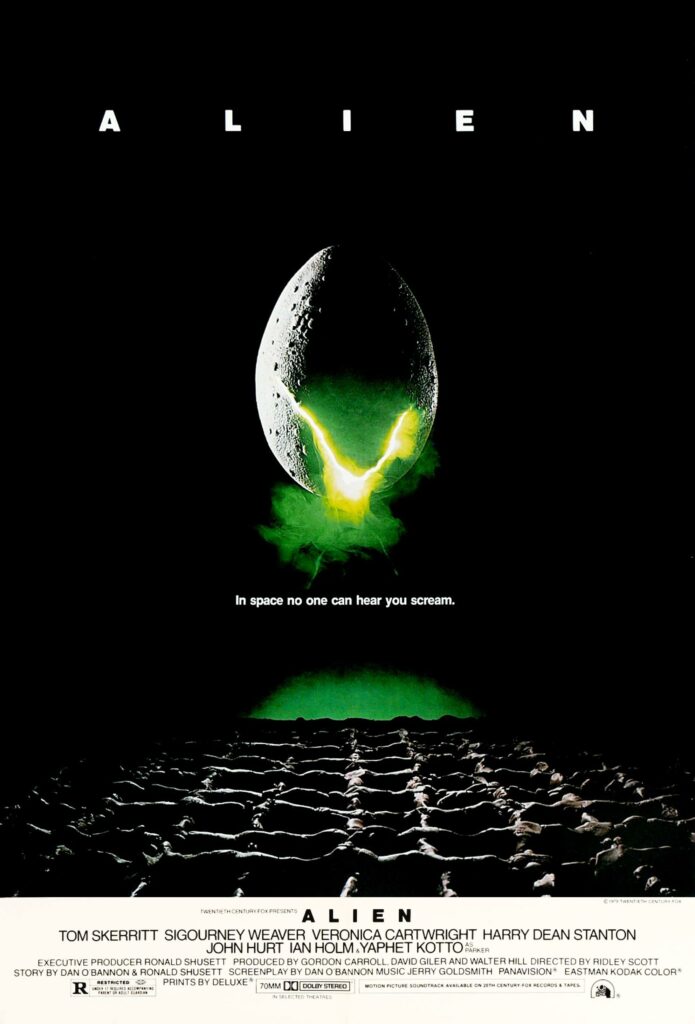
Alien (1979), directed by Ridley Scott and written by Dan O’Bannon, follows the crew of the commercial space tug, Nostromo, as they encounter a highly advanced and predatory Alien creature loose on their ship. Returning to Earth, the crew is in stasis: Captain Dallas (Tom Skerritt), Executive Officer Kane (John Hurt), Warrant Officer Ripley (Sigourney Weaver), Navigator Lambert (Veronica Cartwright), Science Officer Ash (Ian Holm), and two engineers, Parker (Yaphet Kotto) and Brett (Harry Dean Stanton).
They are awoken from stasis early by the ship’s computer, Mother, after detecting a transmission from a nearby moon. Per company policy, they head down to investigate the distress signal despite warnings from members of the crew. After a rocky landing that damaged part of the ship, Dallas, Kane, and Lambert head out into the hostile landscape, discovering a strange crashed ship. Kane descends deeper into this ship and stumbles upon strange egg-like objects, which awakens in his presence. Then, a face-hugger emerges from the egg and attaches itself to Kane’s face. When they return to the ship, Ripley, the officer in charge, refuses to let them into the ship due to quarantine protocols, but Ash ignores her, letting them. Ripley mistrusts Ash, causing many clashes between the two. Most of the crew senses the danger that lay on this moon and so the crew repairs the ship, then takes off with Kane and his face-hugger. Ash examines this strange alien and attempts to remove it from Kane, discovering that it contains highly corrosive acid that will destroy the ship and any attempts to remove it will kill Kane.
Later, the face-hugger is found dead and Kane wakes up with some memory loss. All seems well until Kane begins to convulse and choke. A small alien life-form breaks out of his chest and flees from the crew, killing Kane instantly. Ash persuades the crew not to kill the Alien, leading to suspicions of his true motives (especially by Ripley). After ejecting Kane’s body from the airlock, the crew separates and hunts for the creature with tracking devices, electric prods, nets, and flamethrowers. Now, the Alien simply needs to pick the crew off one by one. The next victim is Brett who separates from his group to search for the ship’s cat, Jones. What he finds instead is shed skin and a huge fully developed Alien who kills him instantly, taking his body away. The crew figures out that the Alien is using the air ducts to travel, so Dallas enters the air ducts with a plan to force it into the airlock. The Alien, proving itself to be both agile, and intelligent, attacks Dallas, costing the crew its captain.
Now that Dallas is dead, Ripley is now in charge. She continues with Dallas’ plan, despite Lambert’s concerns that the Alien is picking them off one by one. Ripley interfaces with Mother, discovering Ash has new orders to bring the Alien back to Earth and the crew is expendable. She confronts him with this new revelation, and gets into a violent confrontation, leading to the astounding twist that Ash is an android. Ripley, Parker, and Lambert destroy Ash after he admits that he was assigned to ensure the Alien’s survival, then decide to self-destruct the ship and leave by escape shuttle.
As they prepare for this daring escape, Ripley finds the cat, Jones, while Parker and Lambert are violently killed by the Alien. With the self-destruct sequence initiated, Ripley finds herself blocked by the Alien, unable to enter the shuttle. She attempts to stop the self-destruct but is unsuccessful. She then returns to the shuttle with the Alien nowhere to be found. She undocks the shuttle barely escaping the explosion from the Nostromo’s destruction. Ripley puts Jones into a stasis pod but soon finds that the Alien has stowed away on this shuttle. With quick wits and slow movements, she puts on a spacesuit, and then opens the airlock, forcing the Alien out of the ship. Ripley is forced to shoot it with a grappling hook to prevent it from hanging on, and then she fires the engines up, killing the Alien instantly. She makes a final log, then puts herself into a stasis pod.
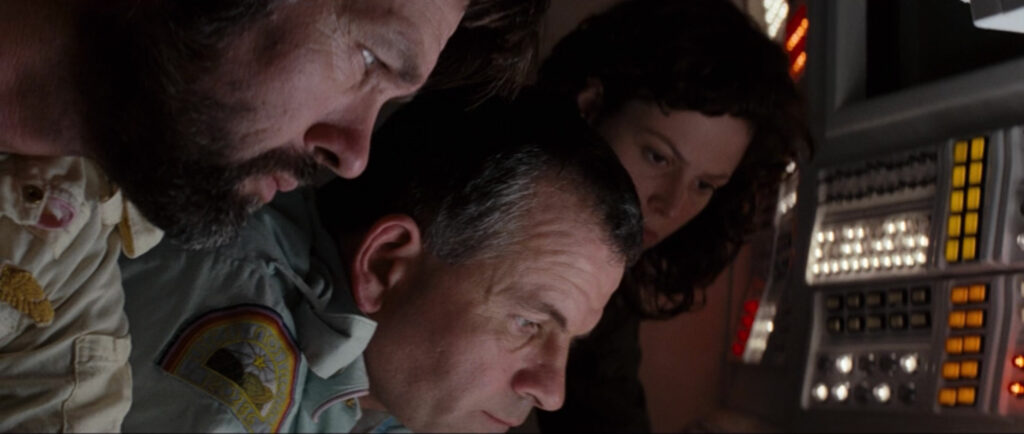
Dallas, Ash and Ripley played by Skerritt, Holm, and Weaver via HD Report
Horror Film Rating System
Category
Rating (/10)
Performance
9
Special Effects
9
Violence/Gore
6
Score/Foley
8
Scare Factor
8
Performance
All of the actors in this film performed with such veracity and skill, but I feel we should not look any further than Sigourney Weaver’s performance. Her role in this film made it what it is. It definitely helps that this character was well-developed and multi-faceted. Of course, this is because the character was originally written for a man. She shows so many different emotions beautifully. She screams in anger, frustration, fear, and cries out of desperation. It is so incredibly believable and makes you root for her to win. She shows vulnerability and strength. Another actor, whose performance was even received a Saturn Award for Best Supporting Actress, was Veronica Cartwright. She showed more of the fear and vulnerability experienced in this terrifying situation. In particular, her death scene is incredibly acted. Another talented actor was Ian Holm, who played the deceitful android Ash. Finally, John Hurt, who played Kane, was also an amazing addition to the film. In particular, the scenes involving his character being attacked by the face-hugger and chest-burster. I really enjoyed the performances of this film and feel that they especially demonstrate that a smaller cast can still create an effective movie.
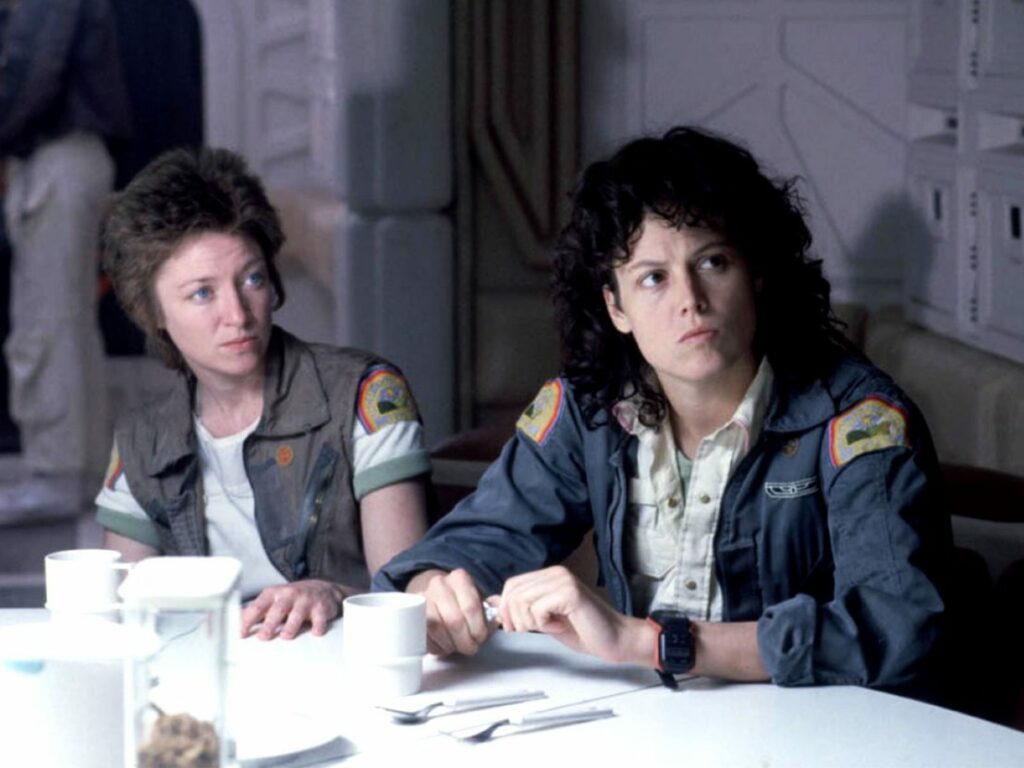
Lambert and Ripley played by Cartwright and Weaver via Little White Lies
Special Effects
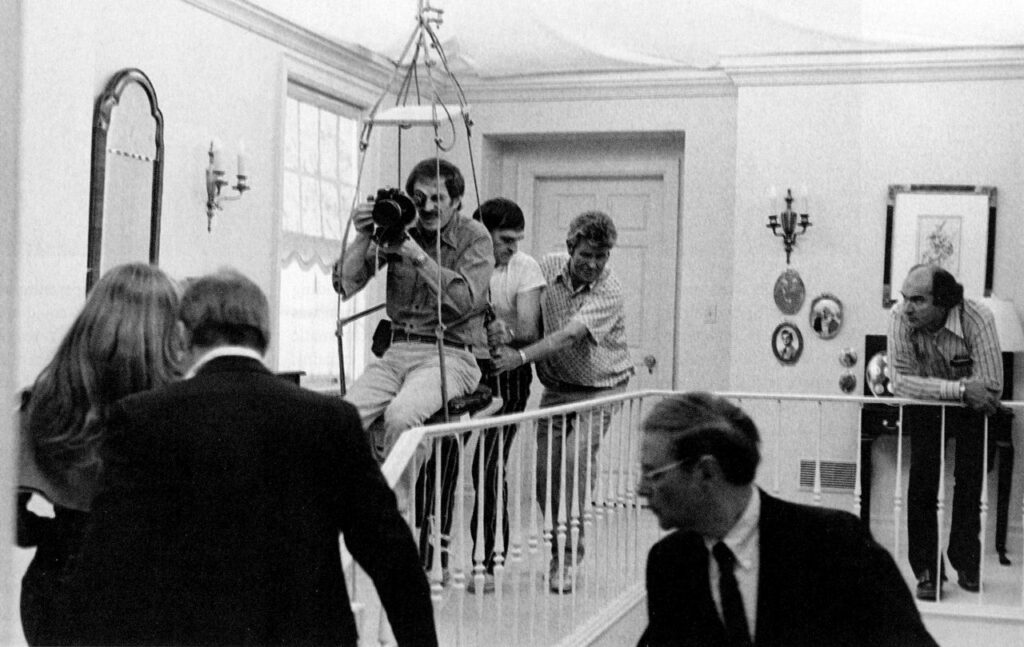
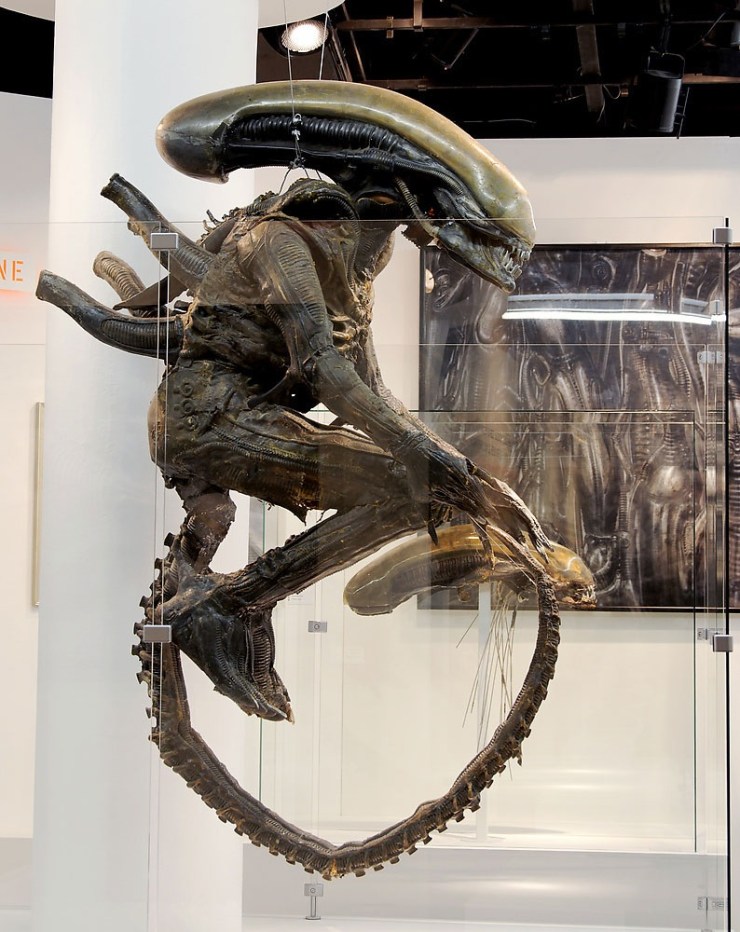
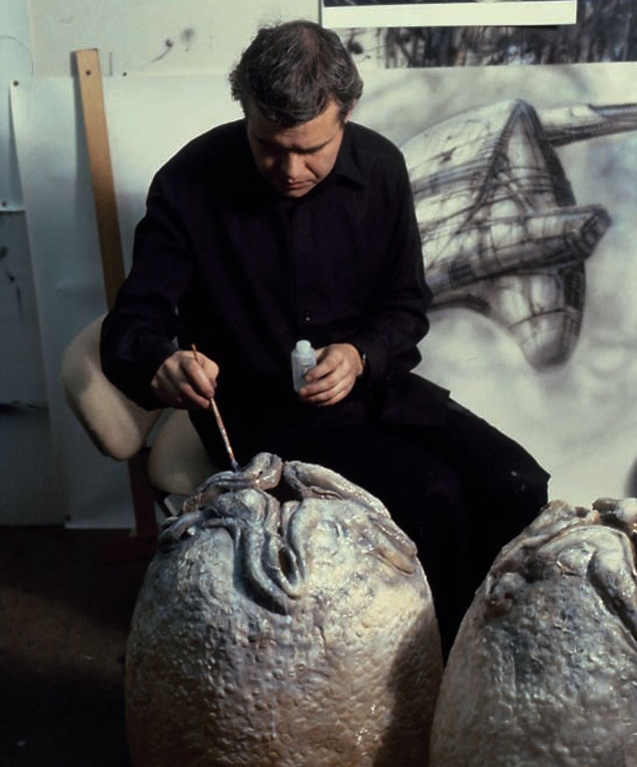
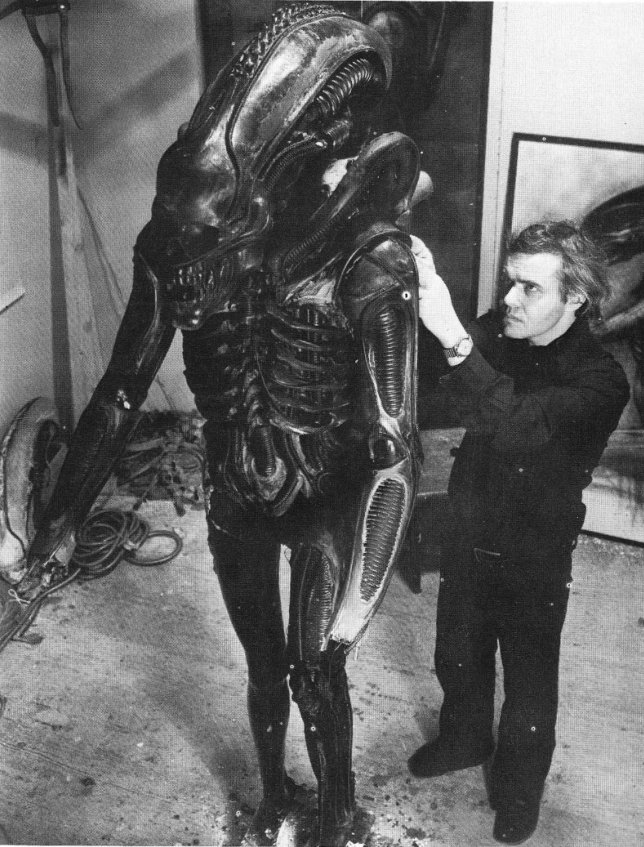
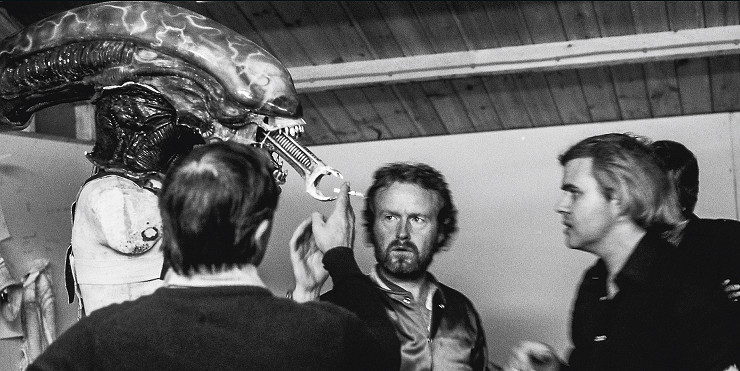
The special effects of Alien are a huge draw for this film. The design of the Alien in its three stages: face-hugger, chest-burster, and adult alien (nicknamed “the big fellow” or “the big guy” by the crew). The biomechanical nature of this alien species comes from the great mind of H.R. Giger, a Swiss artist. At the time of the project’s inception, he had released the book, ‘The Necronomicon’, which Ridley Scott took one look at and then immediately flew to Zurich to secure Giger. Both the chest-burster and Big Fellow were based on drawings within this book. As well, Giger invented the derelict extraterrestrial ship and its mummified occupant. He was so detailed and dedicated to his work, which was ultimately celebrated when he received the 1980 Academy Award for The Best Visual Effects. As an artist, he used his sculpting abilities to create the giant eggs that housed the face-hugger, using various plastics and rubber casting. As well, they used slime and real flesh-animal meat. The design of the face-hugger was based on a child’s jack-in-the-box with a spring-like tail.
As stated by Giger in an interview with David Huston, “And it has two great hands to hold the man’s head. It is a practical biological form…” “We were having troubles, so I spent most of the time working on the egg and the big alien. We got Roger Dicken to build the face-hugger and chest-burster—and he did them very well. They are taken from my paintings.” Referring to the design of the chest-buster, Giger added “I tried to do several things with the chest-burster. He started out with arms and legs, but later we made them only small. Now he’s like the long skull of the big alien—a long skull with teeth and a tail.” It made the progression to Adult Alien more cohesive as the design of the “tongue with teeth” mimics this baby alien. The design was taken directly from ‘The Necronomicon’ with some alterations to make it less phallic. The extruded skull combined with the tongue with teeth and no eyes created the sensation of this Alien creature. It is such a unique and stylistic design, especially with the fusion of both biological and mechanical parts. Giger continued in the same interview, “Then I started thinking. That long skull ought to have a function. I thought: I can make a long tongue come out. The end of the tongue even looks like the head of the chest-burster. See the muscles and tendons of the jaw? We made them out of stretched and shredded latex contraceptives.” “There was a tall black person, and we made a cast of his body to build the alien suit on. We built up details with plasticine and even some real bones—for the rib cage. And we used tubes and piping and other technical stuff. This is my way, you see: he is half organic and half technical. The alien’s biomechanical.” This was his vision and it paid off immensely, creating an alien that will never be forgotten.
Giger working on the Big Guy via CinephiliabeyondRidley Scott, H.R. Giger and other crew members working on the Big Guy via Cinephiliabeyond
Violence/Gore
The violence and gore within this film are quite interesting. It starts with Kane being attacked by the face-hugger in an intrusive and violent manner. Then it escalates with the chest-burster scene that is incredibly gory and graphic. This is when things take a turn… We experience Alien jump scares for both Brett and Dallas’ deaths, but we never actually see them die. It always pans away or fades out. This leaves a lot to the audiences’ imagination. Then in the last 30 minutes of the movie, we witness Lambert and Parker’s incredibly violent on-screen deaths. Overall, the cool-down of on-screen deaths in the middle amplifies the terror the audience experiences in the last 30 minutes of the movie. I think of the other films in the Alien series, specifically Prometheus and Alien Covenant. Both included many graphic deaths from the Aliens, but they utilize CGI heavily. It definitely invokes reactions from the audience, but in a much different way to the original. I have noticed that in some horror movies they tease the audience barely showing the entity, which adds to the fear of the unknown. In some, the entity is revealed and then it loses its scare factor (e.g. Mama). I found the violence and gore in this movie quite effective and not gratuitous.
Score/Foley
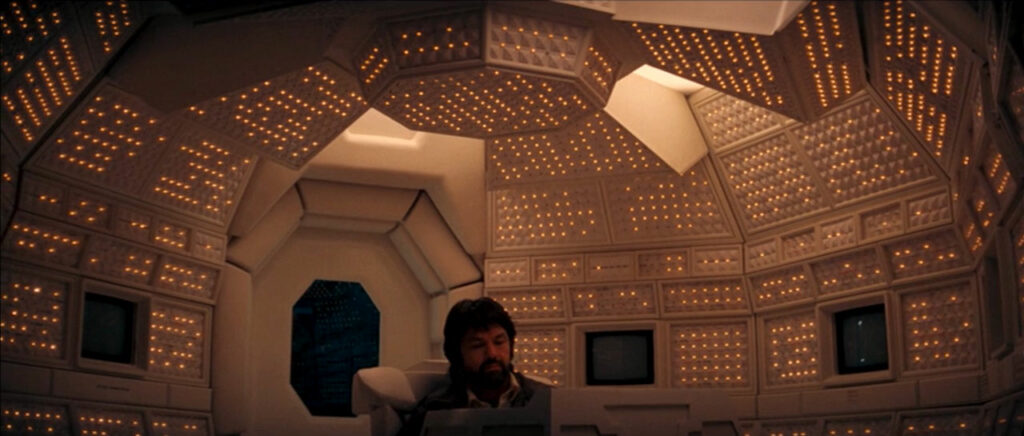
The score and foley in this film are really well done. I am thankful that I am rewatching while intentionally listening and noticing the sounds of this film. I found all of the ship’s sounds to be very believable and add to the isolation and fear within the ship. More importantly, the Alien foley is perfect and terrifying all at once. The roars, snarls and raspy breathing! As well the score itself foreshadows much of what is to come, which ultimately lends itself to the scare factor of the movie. I noticed in particular the flute/wind crescendos were captivating. As well, they knew when no sound was necessary, which then made the jump scares that much more spontaneous and frightening. Finally, when Ripley kills the Alien, the music changes entirely into happy music, letting the audience know all is well. The score and foley of this film are effective and captivating.
Scare Factor
I have seen this film quite a few times and before I started watching it, I assumed that it would not be very scary. I believed that I would be unfazed. However, it definitely is a scary film because I was crunched into positions as I waited for the Alien to attack. It definitely is a subtle horror movie in that sense. It almost seems like a sci-fi action until the chest-burster scene when things ramp up. A lot of what makes this scary is the anxiety of knowing something bad will happen, but being unable to stop it or look away. As well, this intense sense of isolation that Ridley Scott developed perfectly hits us, humans, in the most primitive spot in our psyche. Giger’s designs push this film into much scarier domains as these organisms are both biological and mechanical. The sheer size of the adult alien also terrifies me, especially in the scene with Parker and Lambert. An important moment that provides contrast to the terror is the scene when Kane wakes up and everyone is happy and laughing. This is then followed by the chest-burster scene… A short-lived moment of happiness. Overall, this movie creates moments of intense scare and fear and then eases off until the next moment. This is incredibly effective and makes this such a good film! If you have some time, this video essay is very detailed and relevant.
Some articles to read if you are interested in learning more…
This post contains content not suitable for children. It contains discussion about violence, gore, and death. It includes clips with profanity and dogs being killed.
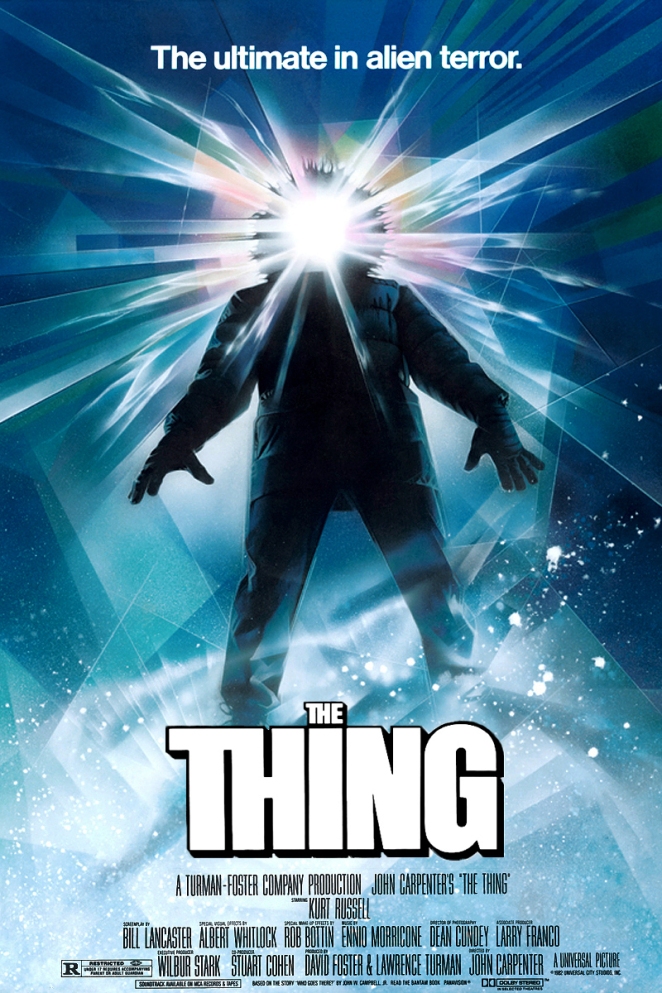
Directed by John Carpenter, The Thing (1982) follows a research team in Antarctica as they attempt to survive against a shape-shifting alien that consumes entire organisms into its form taking on their physical appearance. It was based on the novella, Who Goes There? by John W. Campbell Jr. The research team consists of the helicopter pilot, R. J. MacReady, played by Kurt Russell; the station physician Dr. Copper, played by Richard Dysart; senior biologist, Blair, played by Wilford Brimley; assistant biologist, Fuchs, portrayed by Joel Polis; geologist, Vance Norris, played by Charles Hallahan; meteorologist, George Bennings, portrayed by Peter Maloney; radio operator, Windows, played by Thomas Waites; mechanic, Childs, played by Keith David; assistant mechanic, Palmer, portrayed by David Clennon; dog handler, Clark, played by Richard Masure; and the cook, Nauls, portrayed by T.K. Carter.
The film starts with a Norwegian helicopter pursuing a sled dog. The pilot and helicopter blow up accidentally, leaving behind the sled dog at the US Outpost. Disturbed by these events, MacReady and Dr. Copper investigate the Norwegian base and recover charred malformed humanoid remains. The sled dog is put in the kennel with the other dogs and the Thing properly introduces itself by transforming and consuming the sled dogs. This begins the fight against the Thing! The team discovers a buried alien spacecraft that Norris theorizes has been buried for at least 100,000 years.
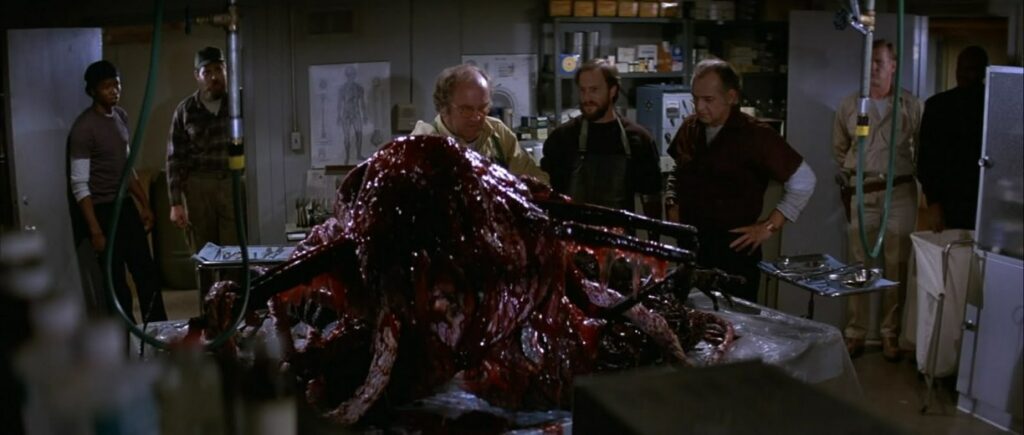
As they encounter the Thing in different forms, the team discovers that it assimilates with a person, ultimately becoming that person in Thing form. This is when things take a turn. Now, anyone in the crew could be a Thing and so suspicious run rampant. One by one, members of the crew fall prey to the Thing. We see almost every character meet their end by their deadly encounter with the Thing. There is the iconic defibrillator scene in which Copper attempts to defibrillate Thing-Norris, but instead, Norris’ chest becomes a giant mouth that bites off Copper’s arms. This scene demonstrates the impeccable practical effects this movie employs thanks to Rob Bottin.
The crew realizes the dangers to humanity if this organism escapes, so Blair kills all of the sled dogs and destroys their helicopter and radio. With all of the unrelenting paranoia, no one can trust anyone and tensions run very high. One by one, they drop like flies. MacReady figures out that each Thing is independent and devises a test using blood samples and a hot wire, which reveals Palmer to be a Thing. Each Thing can only be destroyed using fire, leading to a lot of charred remains.
Once the Thing is effectively assimilated, the only way for survival is to destroy the power generator and go back into deep freeze until humans come and unearth the deadly remains just as the Norwegians did. The last of the research team attempts to use explosives to destroy the base, fighting against Blair-Thing. Finally, only two remain, MacReady and Childs. They share a bottle of scotch as they wait to freeze to death. Leaving some major questions: what will happen when the recovery team comes in the spring? Is Childs actually a Thing? Is MacReady? Are they both or one of them? It is this ambiguity and the practical effects that have made this film such a cult classic.
Horror Film Rating System
Category
Rating (/10)
Performance
8
Special Effects
9
Violence/Gore
8
Score/Foley
8
Scare Factor
9
Performance
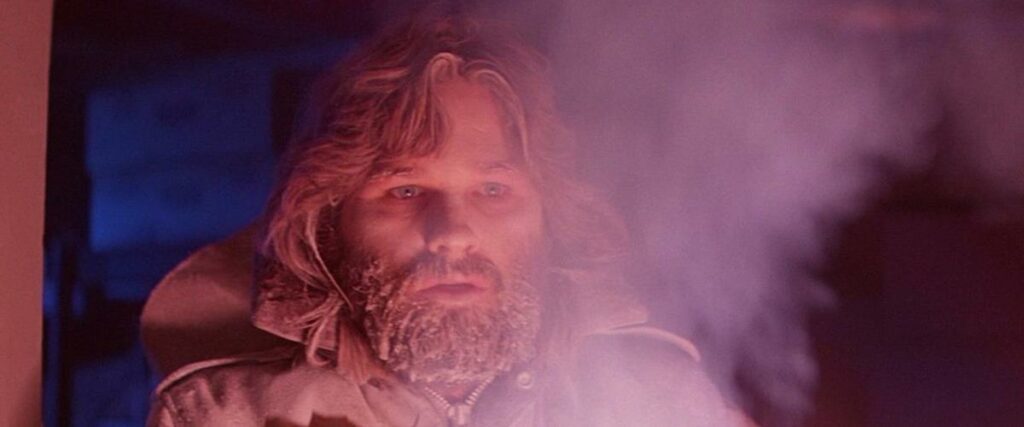
Kurt Russell as MacReady. Photo Courtesy of Roger Ebert.
The performances in this film truly enhance the mood of the film, especially the paranoia the crew demonstrates for each other. Kurt Russell leads this film with his dashing good looks and dramatic performance. He gives quite a few speeches and is the one to conduct the blood test. I really enjoyed the scenes where every character was arguing with each other, adding to the paranoia and mistrust. Each actor fully commits to their role whether it is as their character or their Thing-Character.
Special Effects
The special effects in this film are incredible, especially for its time. I would argue that even today these effects hold up quite well. Rob Bottin is the main reason this movie is so memorable and a cult classic. This was his star-making role as special effects artist that fans will always love and remember. Apparently, he worked on this movie 7 days a week, slept in the studio, and was briefly hospitalized due to exhaustion. He is a dedicated artist that helped to create a film that has become a cult favourite due to the believable special effects. If you are interested in learning more about how they did the practical effects, this article is fascinating.
In a TV Tropes article, the author stated, “The visceral depictions of the anatomically creative forms the lifeform adopts when attacking or threatened were milestone achievements in both Special Effects rigging and creature design thanks to a fusion of masterful puppetry, makeup, and advanced FX rigging, bolstered by new green-screen effects like high-end claymation, matte painting, and early CGI. By using each for the tasks it did best, and combining several approaches in a single shot to create seamless composite effects, Carpenter left surprisingly little room for Narm to set in, and created one of the first cinematic environments to believably pull off Daylight Horror sequences.” In the video below, a comparison is made between The Thing (1982) and The Thing (2011). The main issue with the 2011 film is the over-reliance of CGI that leads to a decline in quality and believability as the movie ages and CGI technology improves. Where the 1982 film excels, the 2011 film falls flat and unbelievable. The saddest part of all? The 2011 film had originally used as many practical effects as possible, but then the production companies insisted on going over everything with CGI instead. Feel free to watch the video below for examples of the effects in both movies.
Violence/Gore
The Thing is a fantastic example of a creature feature in which the creature is alien in origin. This article goes into more depth about creature features you are interested in. There is no shortage of violence and gore in this movie as the Things kill, absorb and then are ultimately burned by the survivors. Once the Thing-Dog transforms and attacks the dogs, the real gore of the movie begins and then it escalates as the Thing continues to take over different organisms and the crew continues to use a flamethrower to destroy them. This leads to graphic scenes, such as the defibrillator scene, and the Bennings failed assimilation scene. Basically, the entire movie goes from one gory scene to the next. The one thing I will say is that although the practical effects are brilliant they do have a look of something not quite human, but something else. However, the creatures are still terrifying and disgusting, such as the weird spider-like head.
The score and foley in this film also help to create the atmosphere and mood. As the paranoia among the crew escalates, so does the score with high-pitched sounds and escalating music. As well, the foley is fantastic, especially in the Thing scenes as there is plenty of squelching, cracking, slithering and other yucky sounds. Another aspect of the foley that I found to add to the film was the very loud dog howling, which sent my dog into defender mode! Finally, the score helps to foreshadow what is to come, especially with the Thing-Dog and its malevolent intentions. I really found that score and foley elevated the film making it a lot scarier.
Scare Factor
This was my first time watching this movie and I have to say I was quite impressed with the scares in this film. At points, I was frozen in place with my hands over my mouth. What makes this film so scary is the idea of not knowing who is human and who is Thing. As well, the setting of the film also adds to the scare factor. It is a desolate, excluded location (very similar to The Shining!) in which the crew spreads out, leaving lots of places to hide or to get attacked. The isolation and paranoia together create tension and fear for the viewer. Another technique used involves jump scares as lights turn on and off, which is a typical trope in the horror genre, but I would argue this is one of the earlier versions. It is infrequent enough that this still ends up being an effective technique unlike modern horror films that solely rely on jump scares (e.g. Paranormal Activity, The Conjuring series, Insidious sequels, Drag Me To Hell). A final aspect of this movie that adds to the scare factor is the ambiguity of the ending, leading to the viewers questioning what will happen next…
I would greatly recommend this movie as it is a cult classic that definitely had me on my toes the whole time. Thanks for reading!
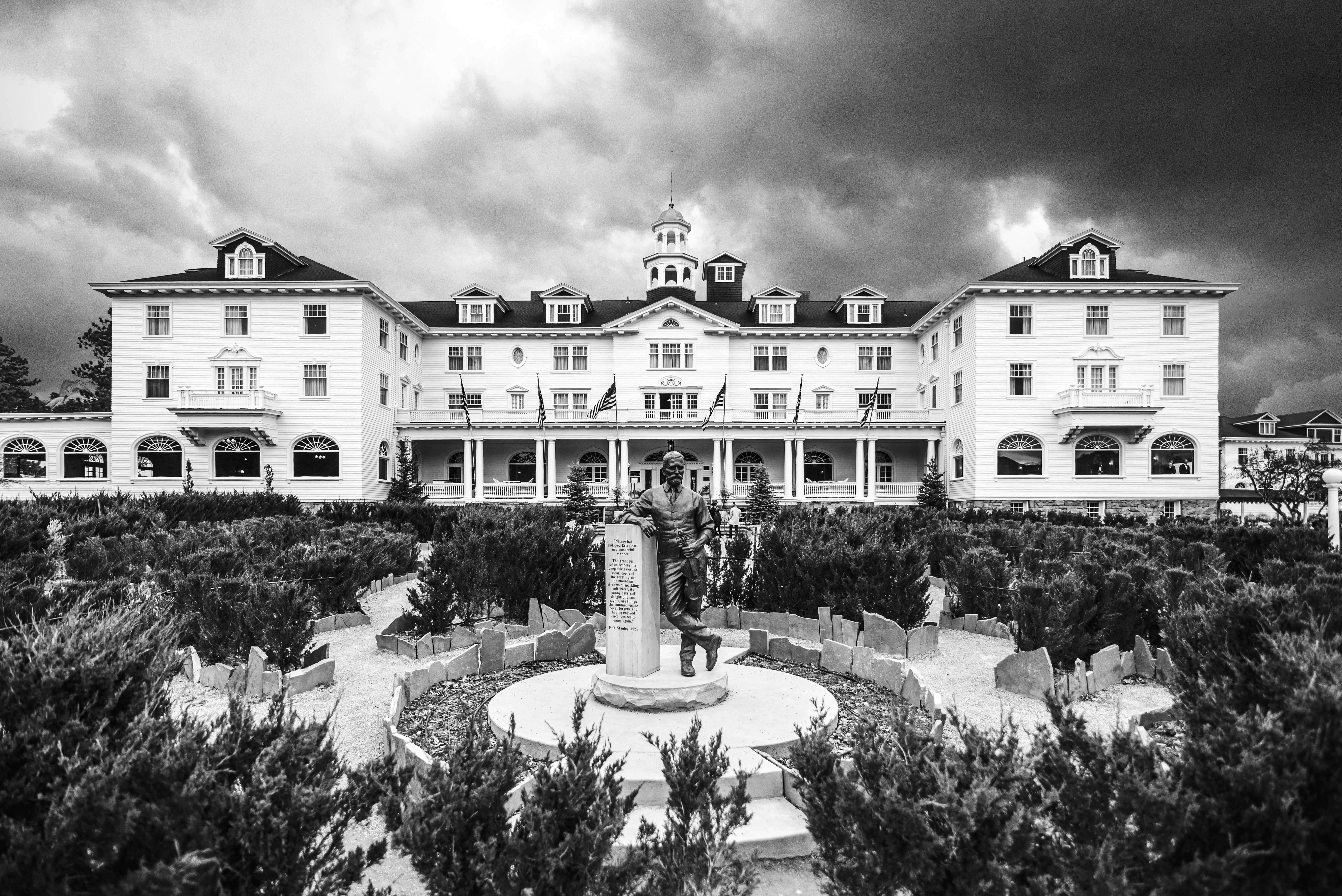
Directed by Stanley Kubrick, The Shinning (1980) starred Jack Nicholson, Shelley Duvalle, and Danny Lloyd. It was based on the book of the same name by Stephen King. It followed a family as they take up residence in an empty isolated hotel for the winter. Soon, the hotel starts to show its sinister purpose as it influences the father into becoming a family annihilator, just like the previous winter caretaker, who murdered his two daughters, and wife, and then shot himself. The father, Jack Torrance, played by Jack Nicholson, is an absolute piece of work. Three years prior, Jack came home drunk and dislocated his son, Danny’s shoulder. Now, he is sober and his wife, Wendy, won’t forget this. Wendy, played by Shelley Duvalle, is a sweet doting mother, who cannot do anything right in Jack’s eyes. Meanwhile, their son grapples with his special psychic abilities, which show him the evil within the hotel. As the hotel corrupts Jack, Wendy and Danny must use their tenacity and intelligence to escape Jack and the hotel.
This horror film has become a fan and critic favourite and always ended up within the Top 5 of most of the best horror movies lists I came across. For me, it took several watches to finally understand the hype. My most recent viewing definitely opened my eyes even more. I imagine when you are critically analyzing you pick up on more details. In terms of the list of elements every horror film needs, I would argue that The Shining is an outlier as it does not fit into the campy horror movie genre. It does have an atmosphere, some elements of surprise, memorable murder weapons and a memorable score. As far as the other, I feel that although it lacks stereotypical elements of horror movies, it delivers with its incredible technical skill.
Horror Film Rating System
Category
Rating ( /10)
Performance
9
Special Effects
6
Violence/Gore
5
Score/Foley
9
Scare Factor
8
In terms of the performance, the actors were incredible. Jack Nicholson plays this part very well with his facial expressions, intonations, and eyes. One scene included below, has become infamous and all because of Nicholson’s portrayal of the mad man, Jack Torrance. The iconic “Here’s Johnny” scene also displays Shelley Duvall’s acting job. She spent most of the movie playing a distraught mother who mostly screamed and cried. It is an incredible performance that really holds the entire movie. It has come to light that Stanley Kubrick and Jack Nicholson may not have treated Duvall very well. In particular, Kubrick’s famously exhaustive filming process must have worn Duvall out from endless days of crying and screaming. The staircase scene, included below, was shot 127 times. Ultimately, it paid off but at what cost? A woman’s mental health?
Anjelica Huston was dating Nicholson at the time and they lived together in London. She says, “I got the feeling, certainly through what Jack was saying at the time, that Shelley was having a hard time just dealing with the emotional content of the piece. And they didn’t seem to be all that sympathetic. It seemed to be a little bit like the boys were ganging up. That might have been completely my misread on the situation, but I just felt it. And when I saw her during those days, she seemed generally a bit tortured, shook up. I don’t think anyone was being particularly careful of her.” However, she cannot ignore the majesty of the final product. “She actually carried the movie on her back if you look at it,” Huston says. “Jack wavers between sort of comedic and terrifying, and Kubrick was Kubrick at his most mysterious, interesting and powerful. But it must have been something for her to be in the middle of that mix. And she took it on. She was, I think, incredibly brave.” For a more detailed read about Duvall, I would recommend this article.
Stephen King’s opinion on the film is also critical of Kubrick’s direction. He stated in an interview, “The book is hot, and the movie is cold; the book ends in fire and the movie in ice. In the book, there’s an actual arc where you see this guy, Jack Torrance, trying to be good, and little by little he moves over to this place where he’s crazy. And as far as I was concerned, when I saw the movie, Jack was crazy from the first scene. I had to keep my mouth shut at the time. It was a screening, and Nicholson was there. But I’m thinking to myself the minute he’s on the screen, ‘Oh, I know this guy. I’ve seen him in five motorcycle movies, where Jack Nicholson played the same part.’ And it’s so misogynistic. I mean, Wendy Torrance is just presented as this sort of screaming dishrag. But that’s just me, that’s the way I am.” I find two parts of this quote especially telling, “screaming dishrag,” and “misogynistic.” It is clear that Kubrick exacted his white male gaze onto the story of The Shining. However, nobody can deny that this is a phenomenal film with its own diehard fans.
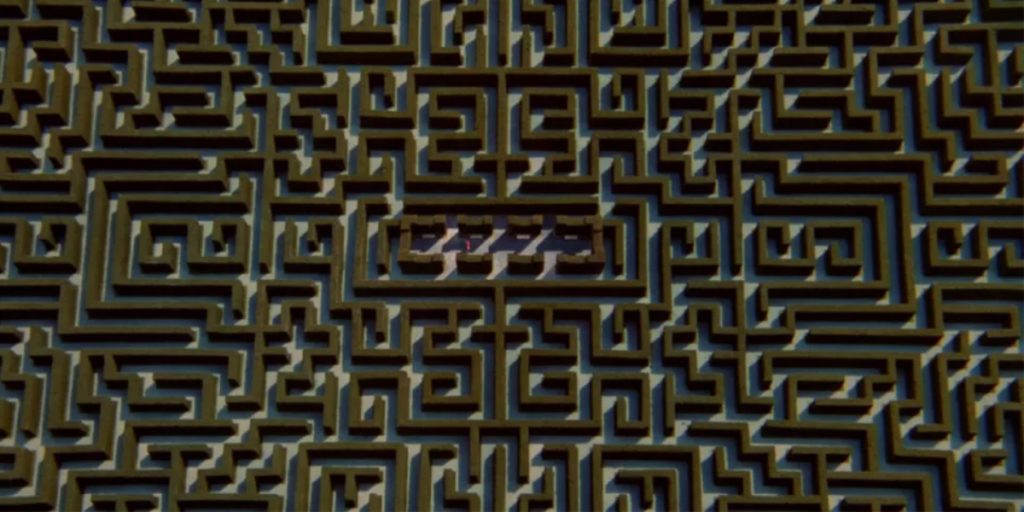
In terms of special effects, there was not very much involved. The main special effect scene was the aerial shot of the hedge maze. To create this scene, they took a smaller inner section of the maze and put it beside an apartment complex. Then, the crew would hang off the edge to get the perfect shot. Next, they spliced and superimposed with a shot of the hedge maze model making the scene quite iconic. You can read more here.
The violence and gore in this film are frightening and disturbing. There is one murder in the movie when Jack uses a fire axe to kill Dick Hallorann, the head chef at the Overlook Hotel, who was brought there by Danny’s psychic abilities. There is a striking scene where blood cascades out of the elevators. Finally, the yuckiest part in my opinion was the lady from Room 237 and her disgusting rotting skin.
This film has an incredibly powerful score and foley, which consists almost entirely of very high-pitched sounds that were ominous, grating, and alert the viewer of future danger they can do nothing to stop. It sets the mood of the film from the very opening shots. Then, as the tension slowly builds, the score and foley continue to arouse the viewer’s fear and foreboding. The combination of stunning visuals with the ominous score creates a powerhouse of a film.
This film is a slow burn in terms of scare factor. From fairly early on, we figure out that going to the hotel will lead to something bad through Danny’s visions. We are helpless. All we can do is sit and wait. The house doesn’t fully show its true nature until the final act of the film when Wendy is running around the house looking for Danny. A part of the film that is especially creepy and frightening is Room 237. The score really brings the scare factor up and establishes the Shining as one of the scariest movies.
I recommend this movie for anyone who loves the supernatural and slow-burning scares. I could talk much more about this movie, but I will leave it at that. Thanks for reading!
My free inquiry project is an examination of the horror movie genre. I deeply enjoy horror movies and have always been fascinated by true crime and other dark topics. There is something compelling about watching villains stalk their victims or supernatural entities lay waste to a city. The feeling of fear is tantalizing, but what makes it even better?? When the movie finishes and you come back to regular, boring and safe life. You are able to experience the fear safely from your couch. In terms of violence and gore, it has become the forefront of the film industry. Our society relishes in death and injury. However, a component of horror films that I admit can be satisfying is when the evil character or the annoying character meets their fateful demise. An even more satisfying aspect of these films is when the hero survives and destroys the villain, e.g. Ripley in Alien. Overall, I love the thrill and fear horror movies bring and cannot wait to examine the best horror films.
Some questions I will ponder: Why are people drawn to the horror genre? What makes a good horror film? What are the best horror movies and why?
My current list of movies has been influenced by Youtube videos and Top Horror Movie lists such as GamesRadar, Rolling Stone, and TimeOut.
Here it is:
The Exorcist (1973)
The Shinning (1980)
Psycho (1960)
Texas Chainsaw Massacre (1974)
Halloween (1978)
The Thing (1982)
Alien (1979)
Rosemary’s Baby (1968)
Scream (1996)
I will be examining these movies using a system designed by myself with categories such as performance, special effects, violence/gore, scare factor, and score/foley. As well, I will delve into themes, imagery, and tropes that frequent these horror flicks and critique these films from a 21st-century perspective. Finally, I will compare these movies to the following list from AMC theatres.
10 Elements Every Horror Film Needs
A memorable, but frightening menace
Clear rules to live by
Plenty of characters that could disappear at any moment
The element of surprise
Atmosphere, atmosphere, atmosphere
A backstory that’s key to the monster/villain’s purpose
The trademark murder weapon
Proper theme music
A showdown for the ages
The possibility for sequel
With all that said, let’s grab some popcorn, a warm blanket and begin! The first movie I will watch is The Shinning.