This post contains content not suitable for children. It contains discussion about nudity, violence and death.
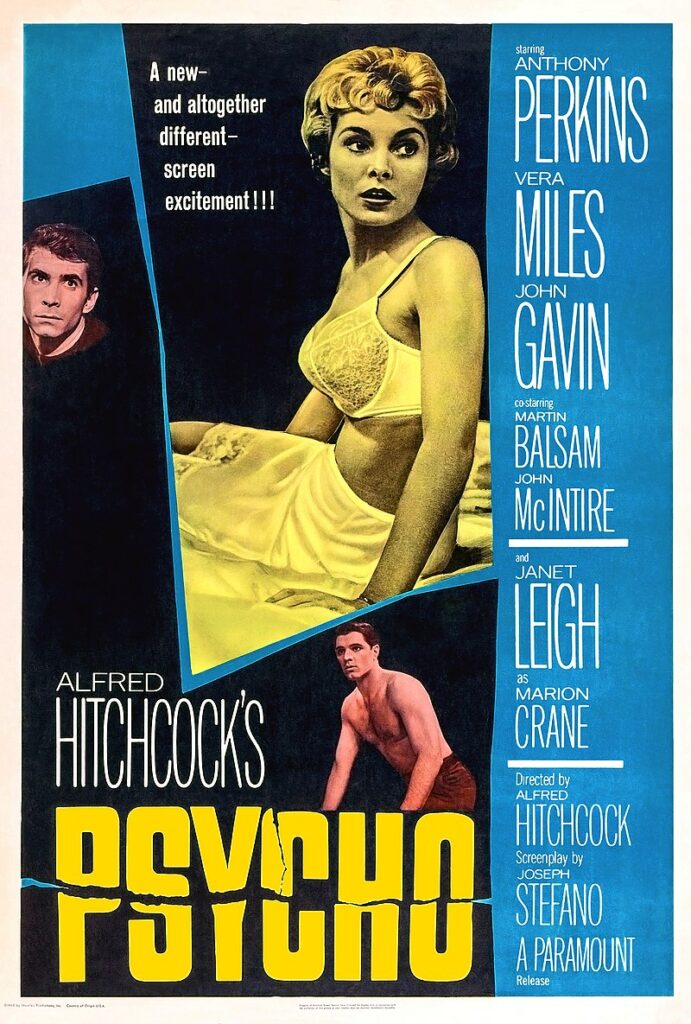
Psycho (1960), directed by Alfred Hitchcock, is a pivotal psychology horror film that follows a woman, Marion Crane played by Janet Leigh, who spontaneously steals money from her employer, goes on the run and encounters a mentally disturbed, shy motel proprietor, Norman Bates played by Anthony Perkins. Marion is chillingly killed in the shower by a person dressed as an older woman. It is revealed that Norman’s ‘Mother’ killed Marion in a jealous rage.
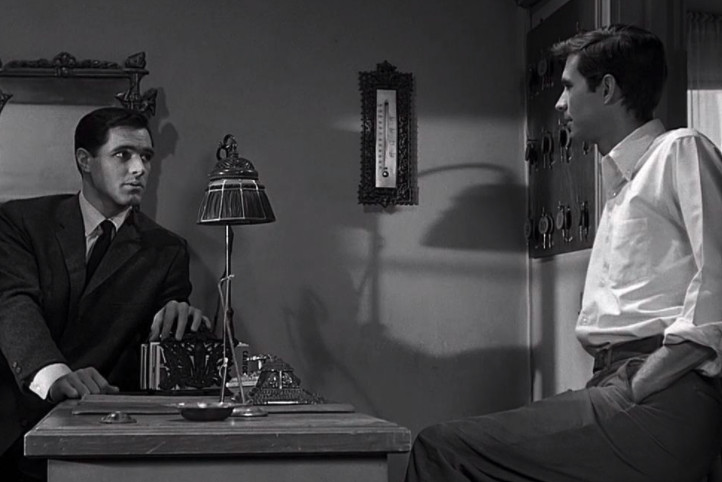
With Marion ‘on the run’ with the stolen money, a private investigator, Arbogast played by Martin Balsam, her sister, Lila Crane played by Vera Miles, and Marion’s boyfriend, Sam Loomis played by John Gavin, retrace Marion’s steps searching for her whereabouts. Eventually, they pinpoint her location to the Bates Motel and the odd Norman.
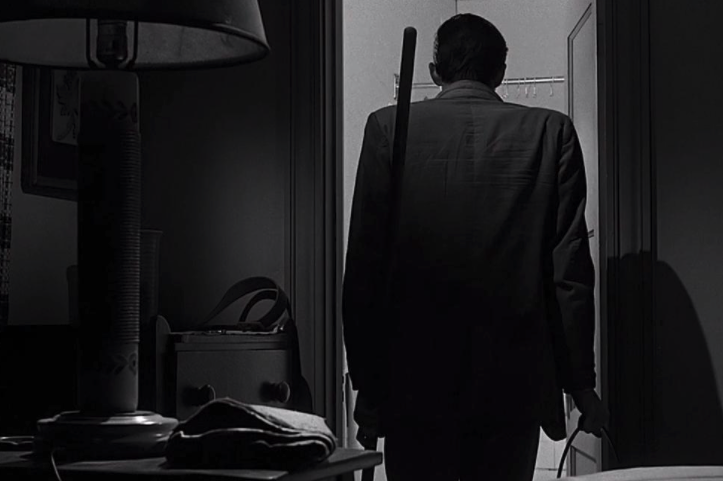
When the private investigator isn’t heard from again, Sam and Lila investigate the motel, house, and Norman’s mother. It is revealed that Norman’s mother died 10 years ago. Lila unwittingly stumbles upon the mummified corpse of Norman’s mother that he had kept all those years back. Sam overpowers Norman and he is arrested for murder.
A psychiatrist explains that Norman killed his mother and her lover in a jealous rage. After committing such a horrific deed, he blocks out the memories and continues on as if his mother were still alive, using her corpse as a vessel. However, he needs more and ends up creating an alternate personality of his mother, who is jealous and possessive towards Norman. This toxic relationship between mother and son sits unresolved in Norman’s mind as Norman/Mother sits in the police station, awaiting their fate.
Filmed in black and white, Psycho was looked at differently than his previous films as it had a lower budget. It received mixed reviews and was considered controversial at the time. However, Psycho was nominated for four Academy Awards, including Best Supporting Actress for Janet Leigh and Best Director for Alfred Hitchcock. Psycho is now considered one of Hitchcock’s best and most famous films. It is especially powerful due to the incredible performances, slick direction, tense atmosphere, and memorable score. At the time, it set a new level of acceptability for violence, deviant behaviour and sexuality in American films (Rotten Tomatoes) and is widely considered to be one of the forefathers of the Slasher genre.
Horror Film Rating System
| Category: | Score (/10) |
| Performance | 10 |
| Special Effects | 4 |
| Violence/Gore | 7 |
| Score/Foley | 10 |
| Scare Factor | 7 |
Performance
The performances within this film are an important reason why it is so prolific. Anthony Perkins’ masterful portrayal of the mentally ill Norman Bates makes the film what it is. He uses minute facial expressions and body movements to convey this battle within his character. When his character is introduced, the audience connects with the shy, dorky man. He seems genuine and kind, but a little odd.
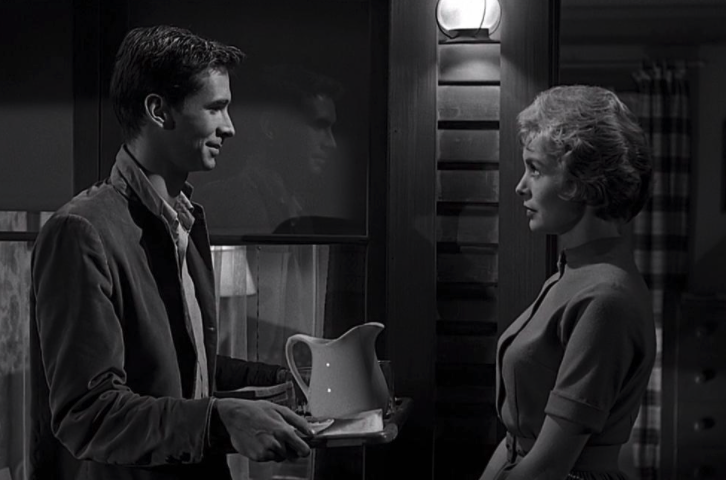
During the scene in the parlour, the conversation between Marion and Norman really illuminates their characters. This scene is particularly powerful as Perkins leans forward and pulls back repeatedly and small tics appear as he shifts between the Norman and ‘Mother’ personas. Perkins is able to portray Norman’s feelings of unease as he tries to cover up the murder. I was struck that he reminded me of Ted Bundy when he lied during interviews, switching stories, changing details.
During the murder clean-up scene, the audience even begins to feel sympathy for Norman as he has to clean up after his mother while experiencing serious emotional turmoil. One of the most memorable scenes in this film was the final scene with Norman in the police station. His facial expressions send chills down my spine as ‘Mother’, voiced by Virginia Gregg, says her final speech all in Norman’s head. The final shot of his face was overlapped with a photo of a skull giving the audience a terrible feeling.
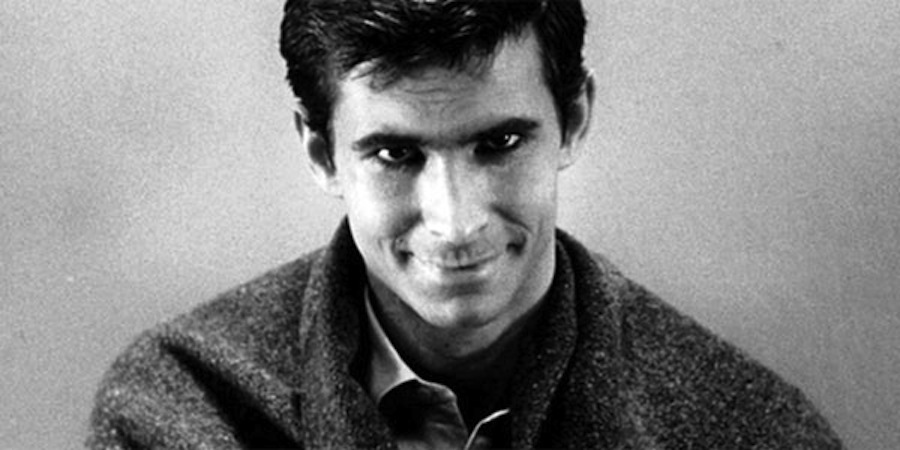
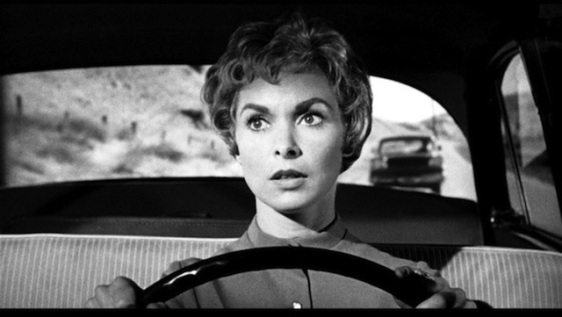
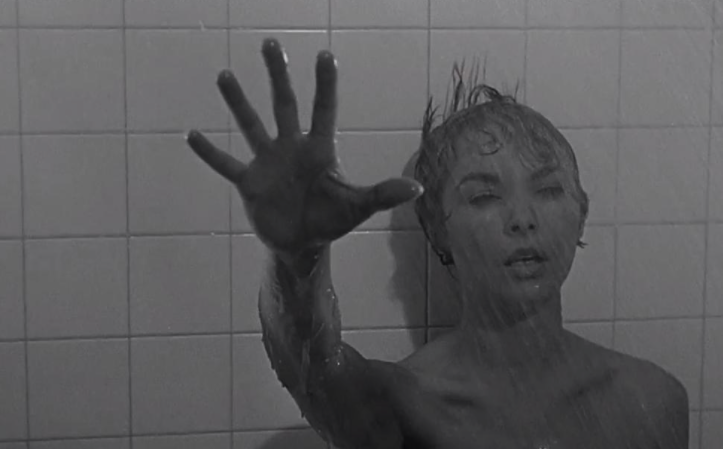
Janet Leigh was also an incredible actress in this film, albeit for the first 47 minutes only. She endears herself to the audience as she commits the crime of theft and is on the run. We experience her fear, paranoia, and anxiety as she attempts to escape. All of the driving sequences are fantastic because of her facial expressions. I also feel that she portrays her character in a demure and poised manner, akin to Hollywood at that time. Of course, we must discuss her death scene as she was an incredible force in that scene. Clearly, it affected her as she rarely showered for the rest of her life. The quick cuts, close up and shocking sound adds to her performance of the scream queen as she is stabbed to death creating a memorable performance and an iconic scene.
Special Effects
Given that this is the oldest film covered, it is reasonable that there is a lack of special and practical effects. However, Hitchcock’s direction really is masterful. His use of framing and camera movement was very purposeful. In particular, the way he frames the police officer and then subsequently the private investigator intimidates the audience, conveying a sense of fear of these figures of power.
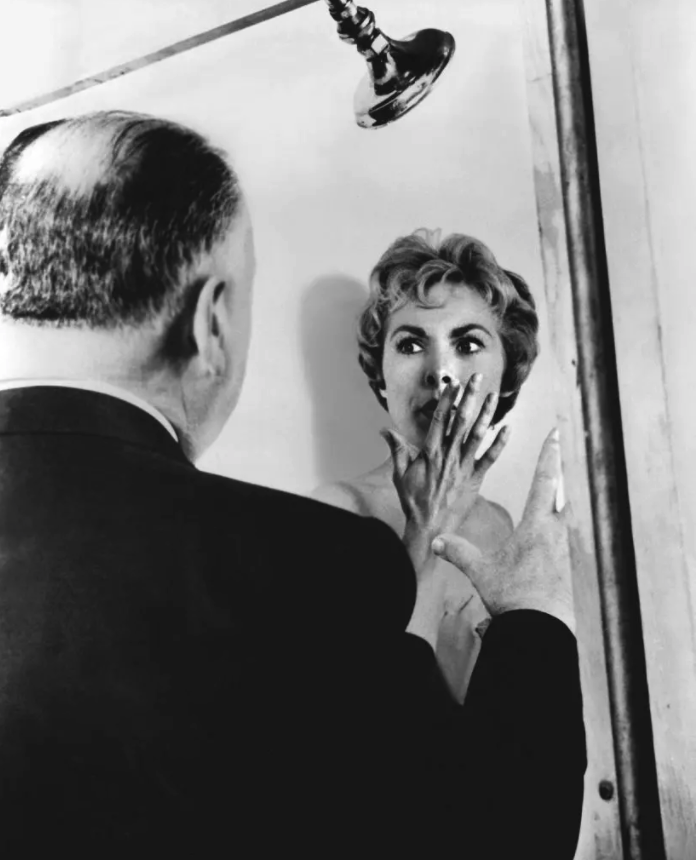
However, the shower scene cannot be ignored as a masterful example of Hitchcock’s storytelling and cinematic abilities. “Much of the scene, which was storyboarded in consultation with the legendary designer Saul Bass (and took a week to film), was shot in extreme close-ups, with swift edits, so that the nudity and violence is implied—felt—but never actually seen. The shower set was constructed so that any of its walls could be removed, allowing the camera to get in close from every angle. And Hitchcock employed a fast-motion reverse shot to make it look like the blade actually pierced Marion’s abdomen.” (Steve Dollar from History) The blood was actually chocolate syrup chosen because of how it looked in black and white.
“Hitchcock scared us to death with cinematic sleight of hand: a peekaboo shower montage, the sound of a knife stabbing a melon, a few lashings of chocolate sauce to serve as black-and-white gore.” (Brian Johnson from Macleans)
Violence/Gore
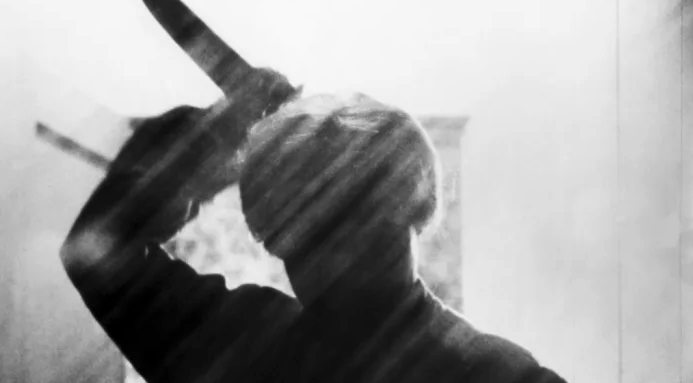
To assess this film, I feel we must look at it from the context of the times. This is one of the first bigger American films to feature nudity and violence. The shower scene is a perfect example of showing a lot, while simultaneously showing less. Hitchcock stated that “there were seventy camera setups for forty-five seconds of footage” (Truffaut)
“Many are close-ups, including extreme close-ups, except for medium shots in the shower directly before and directly after the murder. The combination of the close shots with their short duration makes the sequence feel more subjective than if the images were presented alone or in a wider angle, an example of the technique Hitchcock described as ‘transferring the menace from the screen into the mind of the audience.'” (Psycho (1960 film)).
You never actually see knife stabbing flesh, but it is implied, so you fill that in within your mind. It is a masterful way to present violence and I am thankful that Hitchcock managed to get past the Hollywood censors. Within this film, we witness two murders and a mummified corpse in a shocking twist. Overall, the violence is quite well done, certainly thinking from the context of 1960.
Score/Foley
The score of the film is an incredible masterpiece that creates and shifts the mood as the film continues. In the beginning, the soundtrack propels us along with Marion as she commits her crime and frantically runs away. The audience feels her paranoia, fear and anxiety as she drives away. For the shower scene, “the shrieking strings of composer Bernard Herrmann’s score ratchet up the tension. (It was a novel use of violins, which had usually been employed in film soundtracks to enhance a sense of romance or pathos.) Hitchcock at first resisted them, planning to use no soundtrack at all for the scene. To make the experience even more palpable, the sound of Marion’s flesh yielding to the knife was created by stabbing a casaba melon. Hitchcock had his crew audition multiple varieties of melon until they found the right kind.” (Steve Dollar from History). This film would never have been the cult classic it has become without the score conveying the infectious and terrifying moods.
Scare Factor
Due to Psycho’s slow pacing, the tension in this film builds steadily and intensely as the plot progresses. This film gives the audience a slow-burning feeling of dread of what is to come next. Then, the main protagonist is murdered, leaving the audience shocked. It was an unexpected turn in a film that led the audience to believe the theft of $40, 000 to be most important. Now, the viewer is left on unsteady ground as they watch Norman clean up after his ‘Mother’. The next character we become attached to is the private investigator Arbogast is almost immediately killed in a similar fashion to Marion: quick, close shots of Arbogast, and ambiguous shots of the ‘Mother’. This leaves the viewer uncertain of the circumstances in the household. Next, we watch helplessly as Lila and Sam venture into the Bates motel. This is a fantastic example of a psychological horror film. Hitchcock constantly shows the audience different sins or crimes. All we can do is watch, unable to change what is to occur while reflecting on our own personal sins.
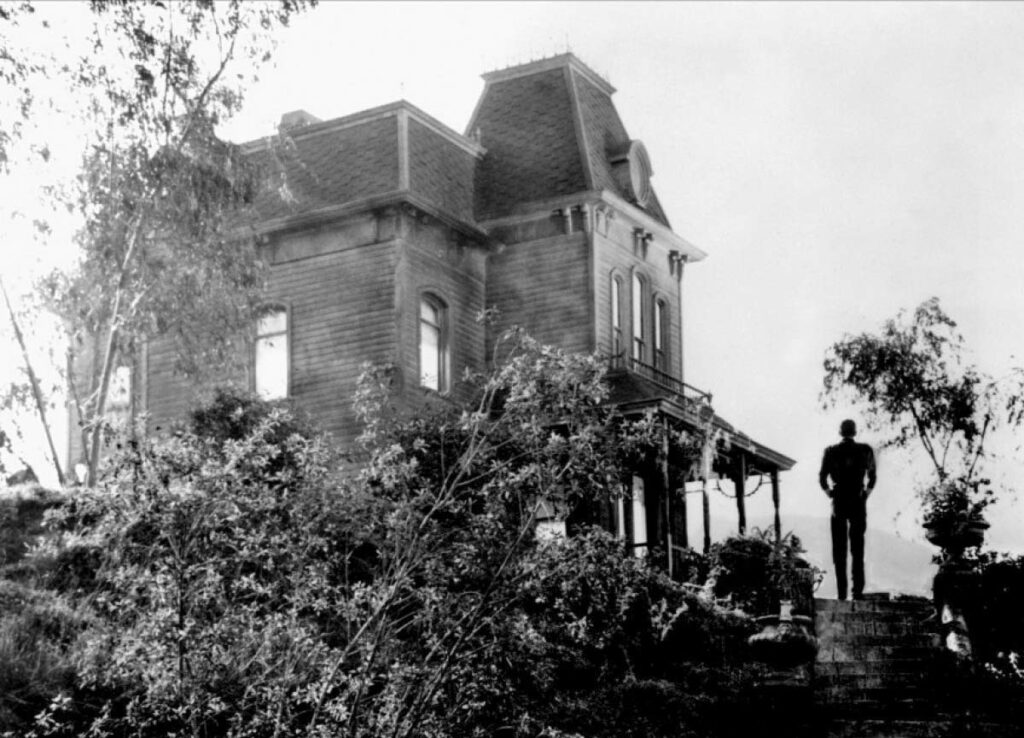
Just like Texas Chain Saw Massacre, Psycho is based on Ed Gein’s heinous crimes. The portrayal of a serial killer in Psycho haunts those who view it, especially when it was first released. This film essentially established the genre of slasher horror through the portrayal of Norman Bates. As well, there is the scene in which Lila discovers the mummified corpse of Norman’s mother. The treatment of his mother as a doll to enact his creepy fantasies is horribly troubling, especially for 10 years. It is a chilling thought indeed.
Overall, this film is certainly creepy and tense. For its time, I imagine it was quite terrifying. However, I feel it exists more in the category of best horror films, related to film production. Perhaps part of my problem is that the last horror film I watched was Texas Chain Saw Massacre which leans heavily on violence and a fast pace. As a present viewer, I am accustomed to fast-paced, jump-scare-heavy, violent horror films. Nonetheless, this is an incredible film and certainly a must-watch in the horror genre.
Leave a Reply
You must be logged in to post a comment.