Computational Thinking
“Computational thinking is recognized as a key skillset for all 21st-century learners.” (SD61). It consists of four parts: Decomposition, Pattern Recognition, Algorithms, and Abstraction.
Decomposition
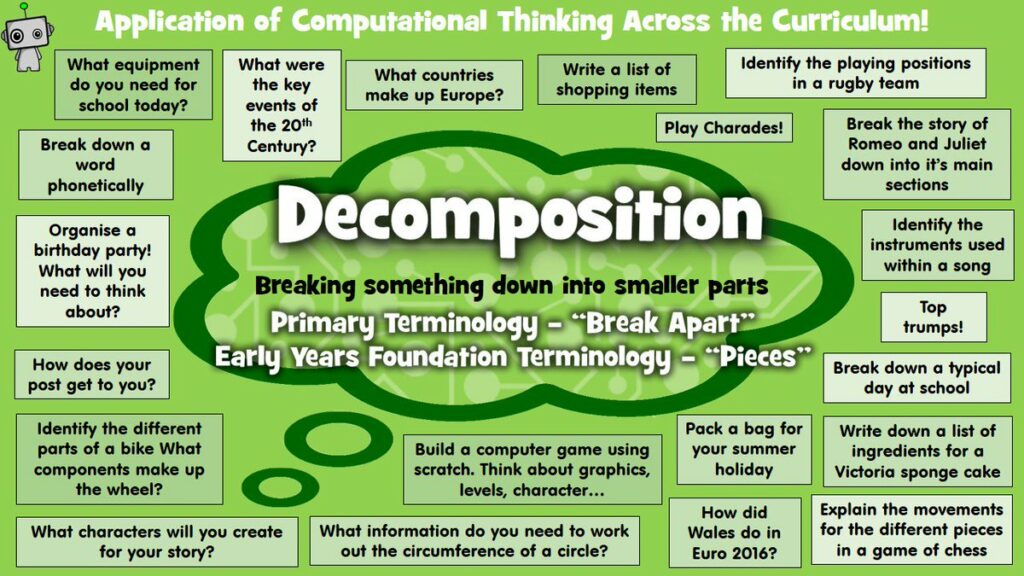
“Decomposition is one of the four cornerstones of Computer Science. It involves breaking down a complex problem or system into smaller parts that are more manageable and easier to understand. The smaller parts can then be examined and solved, or designed individually, as they are simpler to work with.” (Bitesize)
Pattern Recognition
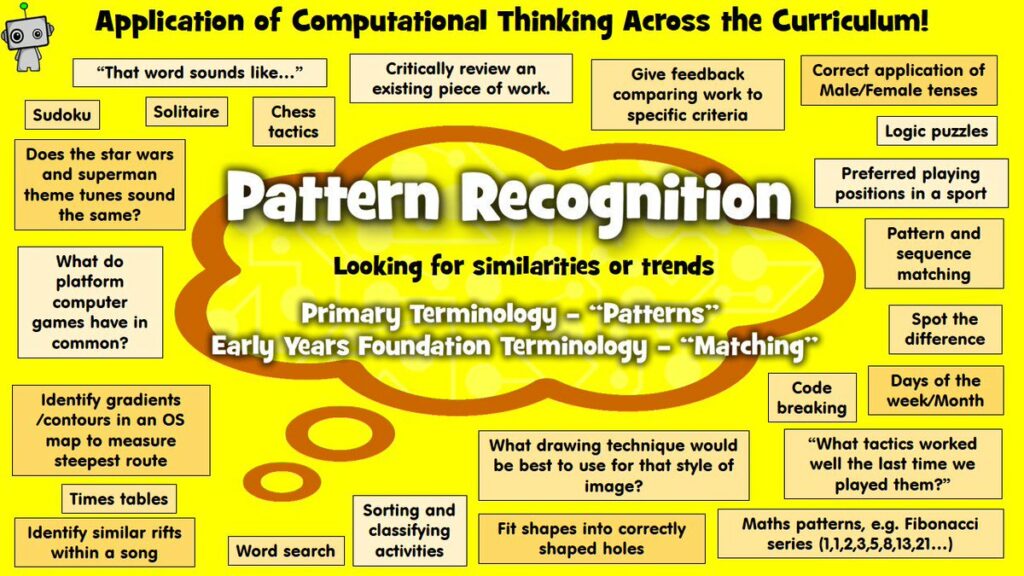
Pattern recognition “involves finding the similarities or patterns among small, decomposed problems that can help us solve more complex problems more efficiently.” (Bitesize)
Algorithms
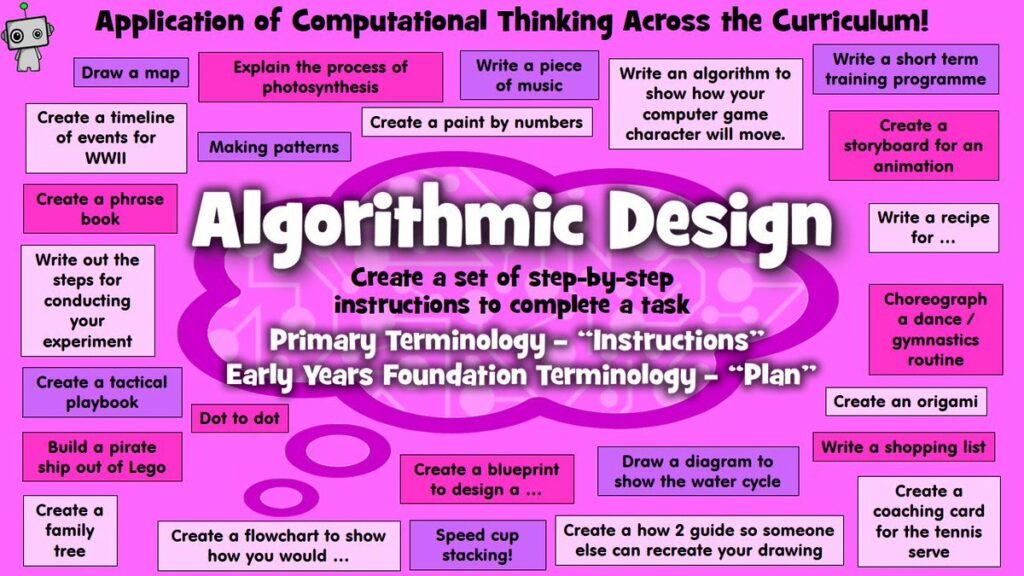
An algorithm is a plan, a set of step-by-step instructions to resolve a problem. In an algorithm, each instruction is identified and the order in which they should be carried out is planned.” (Bitesize)
Abstraction
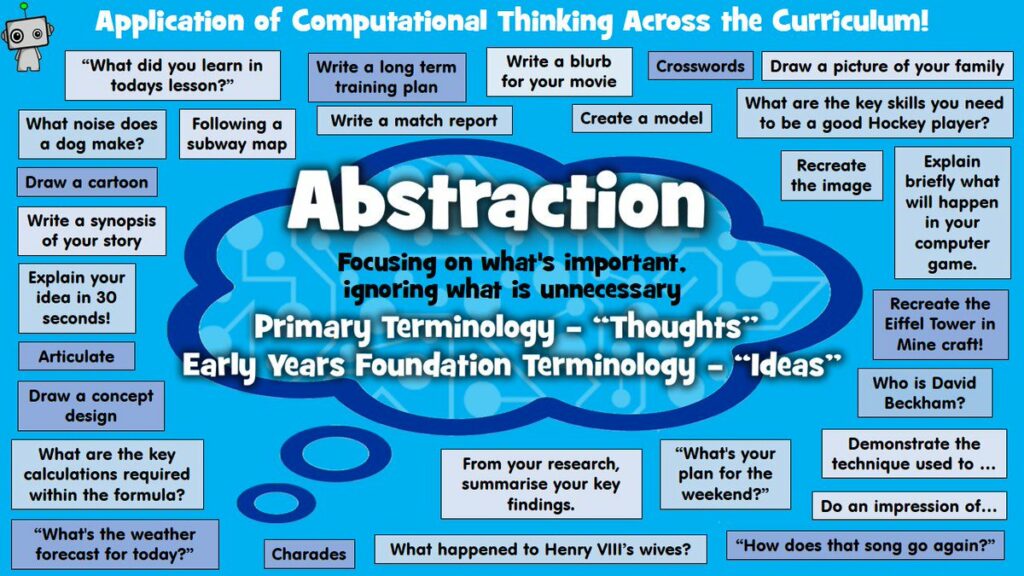
“Abstraction is one of the four cornerstones of Computer Science. It involves filtering out – essentially, ignoring – the characteristics that we don’t need in order to concentrate on those that we do.” (Bitesize)
Can computation thinking help learners become better problem solvers?
“Computational thinking is the problem-solving skill of the digital world.” (Nick Pinder from ISTE). Any type of problem-solving thought process can be used in many different situations. By introducing students to computation thinking, they are able to use their newfound skills in a variety of contexts.
Are there any non-math-related opportunities for integrating coding and computational thinking into your grade level’s curriculum?
Although it is more common for coding and computation thinking to be heavily focused on math, there are plenty of resources in different subjects that align with the BC Curriculum. In particular, there are resources for language arts, science, history, fine arts, and music. Resource: ISTE
Examples:
Program-Pencil Code: Interactive Mad Libs
Lesson: What is Data? – Introduction
Lesson: Patterns in the Periodic Table
Could computation thinking or coding turn math abstractions into concrete form for students with their inquiries at the grade level you’d like to teach?
Coding can turn math abstractions into concrete forms for students. In particular, this coding activity where you learn to code with Anna and Elsa was interesting and engaging activity to introduce students to geometry (from Hour of Code).
There are many unique resources that can help students better understand math abstractions. Hour of Code and CS First just to name a few.
Leave a Reply
You must be logged in to post a comment.