EdCamps are free public events or “unconferences” where educators are given the opportunity to collaborate and connect in an informal setting. Attendees provide options for topics and then the most popular are chosen. There is a focus on group expertise, tech tools, and instructional design. Each session involves a facilitated discussion among peers. The tenets of the EdCamp model are: free and open to all; participant-driven; experience, not experts; rule of two feet/clicks; and vendor-free.
If you want to learn more about EdCamps, please read this Edutopia article and explore the Digital Promise website.
Parent Communication
One EdCamp topic discussed was Parent Communication, an important topic for educators worldwide. It was very valuable to hear others’ experiences and ideas relating to parents. In particular, I connected with the idea of calling student’s guardians the “home team” as this is more inclusive. As educators, we do not need to add to the heteronormativity and the gender binary. By using this more general term, educators show students that the people raising them are part of a team that defies the usual nuclear family that was pushed in the past.
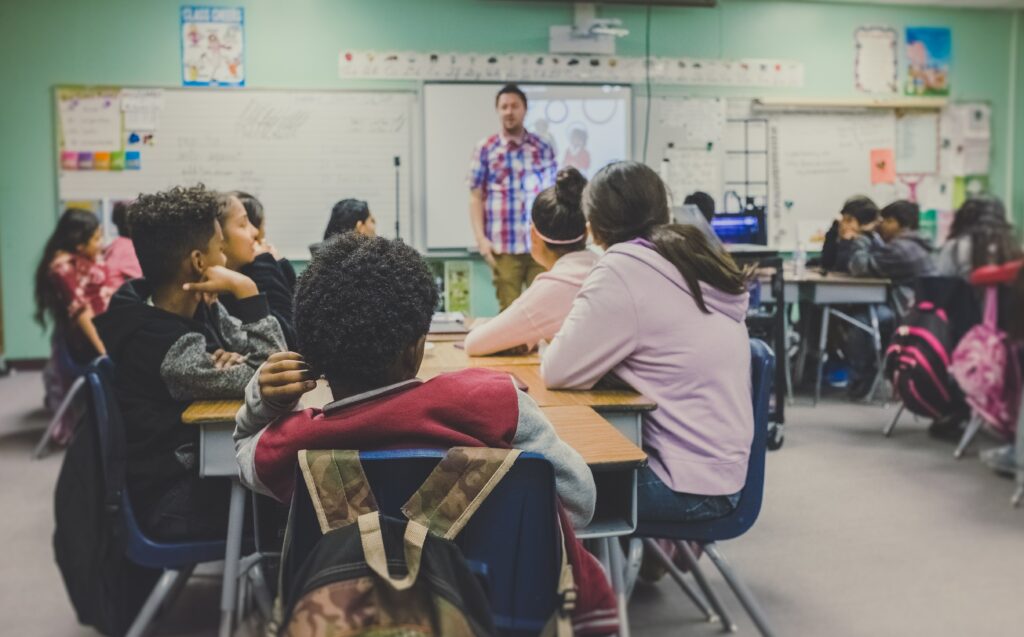
Another suggestion was to start the year off by sending an initial letter to the home team letting them know your practices so as to avoid unnecessary questions. As well, I feel this is valuable for the development of a positive teacher-home team relationship. It is important for educators to communicate with the home team about both positive and negative aspects of their child’s educational journey. This might mean weekly emails with highlights that communicate the highlights of what happened in the week for their children. To make this easier, a template could be used such as “Need to Know/Want to Know/Nice to Know”. Another important way to create a positive relationship with the home team is to show them that you like their child. This can be done by sharing progress, giving updates about their child, and showing them in some way that you care about how their child is doing in your class. This may look like a Good News phone call when they achieve something positive.

It is important as an educator to remember that you never need to defend your pedagogical practices used in your classroom. As well, make sure to keep a paper trail of all communications with the home team as a record of what has been discussed and happened. Another really smart idea brought up is that you should wait at least 24 hours to respond to an email that really upsets you. This allows you to reply with a clearer perspective and a calmer mind. This adds to the idea of professionalism because as upset as we may be, we are professional educators teaching children. We must act respectfully and appropriately to our students and their home team.
Another fantastic idea discussed was that if a home team brings up a concern via email or phone, the educator should invite them into the classroom for a face-to-face meeting to clarify the situation. I always find speaking to someone in person much easier and clearer than back and forth over email or phone. I would rather talk to someone in person to make an appointment than calling them on the phone. I will definitely make an effort to meet with parents face to face. It avoids the back and forth that occurs with emails and phones and it reminds both sides that they are talking to a real person. This can be especially valuable for more sensitive subjects. If you are concerned, you can always ask a backup person to attend the meeting with you.
Communication with home teams is important for educators so they are reminded of cultural considerations and the different types of home environments. Some behaviours stem from these, so it provides educators with insights.

Now, it is your turn, reader. What are your ideas related to parent communication in schools? Do you have any great tips or tricks for other educators?
Naturalism in Schools

The second topic discussed was naturalism in schools, which can be connected to the Indigenous ways of knowing and doing. A huge aspect of Indigenous beliefs centers around the land. To honour this, we, as educators, need to bring more naturalism into our pedagogy. Nature walks are a fantastic activity to integrate naturalism into the curriculum. One person suggested connecting with Mycological societies that provide education on plant identification and other topics, which then can be transmitted to students. Another activity that connects students with the land is by mixing art and natural materials. The class would go out and collect materials in an ethical way and then use those materials to create art. These activities connect Indigenous traditions and perspectives with art and science. In particular, educators must focus on the local nature and Indigenous traditions.

There are many resources in the community that educators can connect with to have them come into the classroom and also many locations for the class to visit. Learning in nature allows students to learn in an enjoyable and low-barrier environment. Another way to bring naturalism to the classroom is to participate in a community or school garden. Children are more likely to enjoy vegetables if they participate in the process of their growth. This also provides an opportunity for group nutrition education related to biology units in the curriculum. A great resource in Victoria is the Compost Education Center, which has amazing presentations and tours of their center. They even have a fish tank that uses recycled water from a native plant garden.

Another way to introduce naturalism in the classroom is to bring different organisms into the classroom, such as plants, aquariums and terrariums. Finally, educators should facilitate discussions that elicit student knowledge and create a classroom environment that is open to sharing in a respectful manner. Children love to learn about the natural world and already have experience and knowledge.

Again, reader: what are your ideas related to naturalism in school? How can educators integrate more naturalism into the classroom?
Leave a Reply
You must be logged in to post a comment.